Oral History
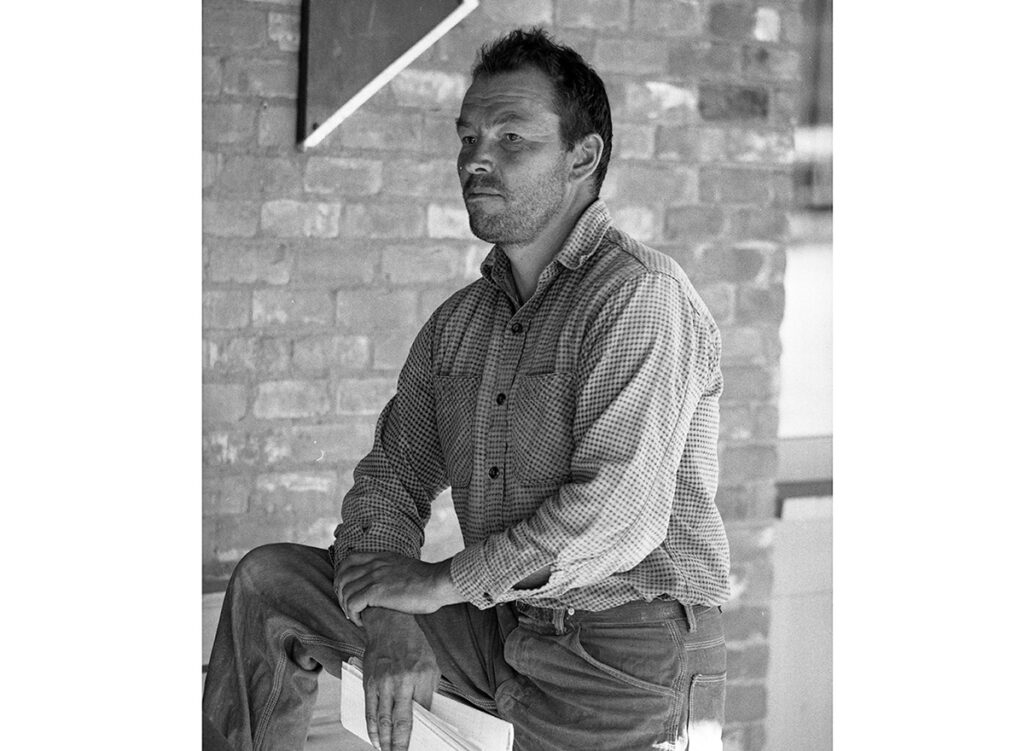
Ralph Melville
One 60 minute oral history interview with Ralph Melville by Larry Fredrick on January 16, 1996. The subject of the interview is the Mountain Chalet, built and owned by Melville. This interview is part of the Architectural Survey Oral History Project.
Ralph Melville
Interviewed by Larry Fredrick
January 16, 1996
C147_1996.020.0001
Larry Fredrick [00:00:02] …with the Aspen Architectural Survey Oral Histories. Today, January 16th, 1996, we have Ralph Melville with us. First of all, Ralph, thanks for being here. Appreciate your taking the time and energy to do this.
Ralph Melville [00:00:19] Glad to help out.
Larry Fredrick [00:00:20] If you would first give us a brief biography of yourself and when and where you were born and when you first arrived at Aspen.
Ralph Melville [00:00:30] Okay. I was born in 1925 in Boston, Massachusetts, and grew up in a little town about 15 miles south of there called Braintree. When I finished my time in the service, and actually part of the time in the service, I went up to Dartmouth College, and that’s where I became interested in skiing. While I was at Dartmouth, I met a fellow who later was on the FIS team and came out here to Aspen, and he knew I wanted to have a ski lodge and told me before I decided where I’d have a ski lodge, I had to look at Aspen. So I came out here in ’51 and ski bummed out here that winter. So that was my first time in Aspen, and I spent February and March out here in Aspen that year.
Larry Fredrick [00:01:35] And then you opened up a ski lodge?
Ralph Melville [00:01:37] And several years later, yes. I looked around, and I thought, you know, this is the greatest skiing I’ve ever had in my life. And I didn’t do anything about trying to do something to have a ski lodge at that time. At that time, the Number One and Number Two lifts… and of course Number One had 240 an hour capacity, and Number Two was 180 an hour, and then the T-bar over on Little Nell, and with the accommodations that they had put in for the FIS, it seemed like there was no way you could make a living starting a new ski lodge. So I didn’t do anything at that time, but I sure had a great time skiing, and it put a bug in my mind for later on.
Larry Fredrick [00:02:31] Great. When you first saw Aspen in 1940 or excuse me, 1951, what did the town look like?
Ralph Melville [00:02:42] Actually, you know later on when I came out, it was 1954, and there really wasn’t much difference between those times out there. The streets, although it was winter, when you’d get the thaws between storms, you could tell that they were dirt streets. The only paved street in town was the highway coming in to the Hotel Jerome, and then up a couple blocks to about where Aspen Lumber and Supply was. And that was kind of the end of the paved road. Everything else was dirt at the time, and several of the older buildings downtown were just kind of shells that hadn’t been fixed up too much, or at all, for that matter. And a lot of them, though, had been fixed up at that time and were being used.
Larry Fredrick [00:03:37] Were both levels being used or just parts of the buildings being used?
Ralph Melville [00:03:42] A lot of them, just parts of the buildings. Like, you know, so many now that have something down in the basement. In those days, the basement was a basement.
Larry Fredrick [00:03:51] What about… you mentioned the Hotel Jerome and the Aspen Supply. What other businesses were in town at that time that you remember?
Ralph Melville [00:04:01] Well, starting down there on that same area where the Hotel Jerome is, Aspen Times was there in the building that they’re in now, and Carl’s Pharmacy at that time was called Matthews Drugstore. And there was the gas station right next door, and Aspen Cortina, I think, was there at that time. I’m not 100% sure on that. But then down the hill, about the only thing down there was United Lumber that was located down, oh, kind of where, a little below Capp’s Auto Supply and a little bit in toward where the parking garage is now. And then the railroad came in at that time, too. So that was still in there. And every Friday, there was a train that came in and a few freight cars.
Larry Fredrick [00:04:59] Were there any buildings that struck your fancy that seemed rather remarkable to you at the time?
Ralph Melville [00:05:06] Well, the Opera House, of course, really stood out then. And the Hotel Jerome, with its white paint and blue eyebrows. It looked sort of odd, I thought, but there was such a mixture of buildings that nothing had been done on around town to those that had been fixed up a little bit, and then little buildings that had been put in there that…
Larry Fredrick [00:05:38] Did you have any idea of the history of the buildings or the community at that time?
Ralph Melville [00:05:47] No. Back in ’51, when I came out, I guess I was kind of the type of ski bum that came out here to maybe look around a little bit, but basically to ski and have some fun, although I did have in the back of my mind the idea of moving out later. But I didn’t really look into the history of it very much at that time. But I was aware that it had started out as a silver mining camp.
Larry Fredrick [00:06:15] Was there any time that you feel that you, and for that matter the community, suddenly became very aware of the history or the value of those buildings?
Ralph Melville [00:06:26] Well, I think when I moved out here permanently and started becoming involved more in the community, getting to know people better that were people that lived here, residents and other business owners, then I became a lot more interested in the history of the community at that time. Right across the street from us was a place called Hillside Lodge that had started out as the original City Hall and City Jail, and I guess the firehouse was there. They had the fire tower with the bell in there. And the fact that… the road in back of us that’s called Dean Avenue was the Colorado Midland Railroad coming in there, that was the railroad right of way coming in to the station over by Little Nell. So I think, you know, things like that kind of opened my eyes more. I remember when we first started in here on this property, there was an old house that was right where we wanted to build the lodge. And then up against Dean Street, there was an old log cabin. And we fixed up that log cabin with some of the boards and things we tore out of the house and used that to live in while we were building the Mountain Chalet. And one Sunday, we were around there and taking a little break from work, and an old fellow stopped by. He said, “Do you mind if I look in the cabin?” And we said, “No,” and I introduced myself, and I’ve forgotten what his first name was, but his last name was Taylor, and he said he had been born in that cabin sometime in the 18–, early 1880s. So, you know, things like that really opened my eyes to the history more. And then, of course, the fact that that was the railroad that went by where we were, and as we’d be digging around, we’d find things like old spikes and different things like that.
Larry Fredrick [00:08:43] Are there any buildings that you remember then that are now gone that you wish maybe were back or…?
Ralph Melville [00:08:52] Yeah, one that really surprises me is the fact that the old original City Hall and Jail went down without a murmur. I mean, the preservation society or… I don’t know what the reason was. I know it’s part of the agreement with the Ritz that they put the skating rink there, and maybe that was the reason that they didn’t do anything to try to preserve our original City Hall that we had here in Aspen. But that’s one in particular that I thought would be a building that they would keep up and try to restore back to what it looked like originally back in the old mining days.
Larry Fredrick [00:09:41] What about the buildings today? There are a lot of very modern, big, different style buildings. Are any of those going to be, in your eye, historically significant 100 years from now?
Ralph Melville [00:09:56] I guess I wouldn’t look at them that way. And maybe they will be. People 100 years from now might be saying that. We’re trying to, these days I guess, preserve the Victorian look in town a lot. But, you know, there’s so much being built that’s more modern type. And then, of course, then people come in and build buildings like I did, that don’t fit in here at all, you know, the Swiss or Austrian look that really doesn’t go in this town, other than it’s a building that’s designed for snowy weather.
Larry Fredrick [00:10:39] Now, you say it doesn’t belong because of its somewhat Swiss look, but there are some that would think that that’s a part of the post-war architecture, that’s really important to same. How do you feel about that?
Ralph Melville [00:10:54] I kind of agree there. And although I felt that, or I feel that if I were to do this thing over again, I probably would have tried to fit in more with the Victorian. But sure, we’ve got to face that, you know, every so often we have changes in styles and so forth, and they become part of the community too. We don’t want to just copy styles from the old days.
Larry Fredrick [00:11:24] Okay. What about newer residents and visitors as well? Do you think they have an appreciation for the history of Aspen?
Ralph Melville [00:11:35] A lot that we’ve talked to really do. It makes something else in addition to the skiing, say, in the winter time, or the beautiful scenery and the fishing and things like that in the summertime, that is an appeal for a lot of people. A lot of people are interested in the history and our heritage. And I think for that reason… I was just coming over on the bus from where I live, and I was talking to the bus driver, and he said that you folks from the Historical Society helped them with getting organized for their lectures on the Maroon Creek bus in the summertime. And so many people that we’ve talked to that ride those busses going up there really comment on how friendly and informative the bus drivers are, and it’s a real community effort for everybody to work on that. And it is something that I think a lot of people, visitors for the first time, visitors that have been coming dozens of times, are interested in.
Larry Fredrick [00:12:52] Okay. What about new residents? Do you think they kind of catch on early, or does it take them a while to sort of…?
Ralph Melville [00:12:59] I think most of them do. And of course most of them start as visitors. So I think that’s part of the appeal of why they might want to move here if they do move here.
Larry Fredrick [00:13:12] Okay. With respect to the historic buildings that are still standing, are there any that you think maybe could be used better than they are or should be helped along, maybe repaired?
Ralph Melville [00:13:31] Well, I guess that’s mostly up to the individual owners as to how they’re used, but as to how they look or remodeling that’s done on them, I think that’s something that’s really not just an interest of the whole community, but a concern of the whole community. And I think some that’s been done with the Historic Preservation Society, I think is good in certain buildings, trying to keep them, as much as possible, looking like they were when they were originally built. And I think that’s real important. I can’t think offhand of any that, you know, I would be that concerned about. You know, sometimes it seems sort of odd. I think of when Elli’s was down there, and they took that one wall, moved it out, and then when they got the building done, they brought the wall back in and tacked it into the building. And it seemed sort of an odd way to do it, but I guess it retains some of the looks of the original building and still allows the owner to get more use out of the building or the space.
Larry Fredrick [00:14:53] Okay, well, let’s talk about some specific buildings now. Let’s start on Main Street with the Sardy House. How do you first remember the Sardy House?
Ralph Melville [00:15:04] Well, of course, without that addition that was in the back, and those trees being quite a bit smaller than they are now, but… And then Tom had that part in the back. I don’t know if they incorporated that into the present building or not, when they brought that out along the alley to the side street. But not really too much different from what it is, because the part that you would really see is that part in the front and the part on… what is that? Aspen Street?
Larry Fredrick [00:15:43] I believe so.
Ralph Melville [00:15:48] I think they did a good job on maintaining that original look to the building.
Larry Fredrick [00:15:55] It’s probably always going to be known as the Sardy House. Are there any good stories that you might know about it or any special things about that building?
Ralph Melville [00:16:07] No, I don’t think so. Tom took me through it before he sold it, and I had a chance to look through there, and it was really quite a building. And so much space in there that I didn’t realize was there from just looking at it from the outside.
Larry Fredrick [00:16:31] Since you were in there before Tom sold it, have you been in it since?
Ralph Melville [00:16:37] No, I haven’t.
Larry Fredrick [00:16:38] I was curious if you think it’s changed much in at least the old part.
Ralph Melville [00:16:42] I’m sure they would have changed the room arrangements and things like that around. On the outside, up to it, is great, and I’m sure they must have maintained that style inside too.
Larry Fredrick [00:16:58] Okay, well, let’s move on down the street to what is known as the Lincoln-Chitwood, better known as the Cantina Building. What kind of shape was that in in 1951?
Ralph Melville [00:17:12] I kind of remember that as… let’s see, I think Kurt Bresnitz had Alpine Jeweler in one little office there, back toward the alley. And then Henry Stein had an office… or Kurt Bresnitz’s was the Alpine Jeweler, not an office. And then Henry Stein had an office in there. And then there was that… on the corner was the, like a little coffee shop or pastry shop. It was around there, and I’ve forgotten the name of the couple that ran that. I think they were from Denmark, I think? And in there… and I think the upstairs had been, the apartments were being used at that time. Of course, they changed a lot of that when they did remodel it, but I think they kept that pretty well too.
Larry Fredrick [00:18:16] What about the time span between current use as the Cantina and your first impression? Do you remember any businesses in there other than the ones that were here when you first came?
Ralph Melville [00:18:30] Well, that little cafe or pastry shop in there on the corner, and the other shops, and I guess some… didn’t? Yeah, somebody remodeled the upstairs, and there was a law office up there, I think, for a while. In fact… well, I’m terrible on names, I can’t remember the names. One of them was a city attorney for a while, and so it’s gone through a couple of stages of remodeling in there, and I think it was kind of a little mod and opened it up with a skylight and so forth when they had the law offices up in there. But the outside appearance, they kept pretty much the same.
Larry Fredrick [00:19:18] Yeah. You started to talk about the present outside appearance. Now it’s painted. Was it always painted?
Ralph Melville [00:19:27] No, I think it was brick back in those days. And it seems to me it wasn’t too far from the time that they were taking the paint off the Hotel Jerome, and they were putting it on that corner. I thought, “Well, it just seems crazy.” Here they’re going to all that expense to take the paint off the hotel, and then they’re putting it on this building.
Larry Fredrick [00:19:50] Do you think the paint detracts from its original style?
Ralph Melville [00:19:54] Well, because of the color of it, it doesn’t stand out like it did on the Hotel Jerome, where it was painted white. But…
Larry Fredrick [00:20:03] Okay. Let’s move up to Hopkins Street to the Collins Block, and it’s probably better known as Sardy Hardware’s building. Anything significant about that? Was that the hardware store when you came to town?
Ralph Melville [00:20:20] Right. There were two hardware stores, that one and Tomkins Hardware, but that was the main one that people went to. They seemed to have a better supply of things in there. And the little sheds out in back, I remember, where they would have stuff stored and just the sheet metal roof and so forth, but yeah, it was THE hardware store at the time. And then across the street was where they had the lumber yard and stocked the lumber there. Then they had another little shed down by the railroad where they kept things like cement and masonry cement, things like that, blocks and bricks and that type of stuff.
Larry Fredrick [00:21:14] Any great hardware stories or tales about traveling through the hardware store?
Ralph Melville [00:21:21] No, other than if you were persistent enough, you could find about anything you wanted there. And Bernie was there, I guess, for years. And he just about knew where every nut and bolt and screw was in that place. And he was really so helpful and… One little sideline that has nothing to do with buildings, but when I first came here and started building, and it was taking me a little more money to build this place than I thought, and I asked Tom Sardy if he could carry me a little while on my bill. And he said, “Sure, we’ll carry you for a while. Just keep trying to pay off on it.” And I think he carried me on the original part of the construction here for about a year and a half or two years before I finally got that bill paid off. And Tom helped a lot of people around this town that were getting started. He was really helpful that way. If he thought you were working hard, he didn’t mind helping you.
Larry Fredrick [00:22:32] So there was sort of a small town feel about the hardware store.
Ralph Melville [00:22:37] Right. Yeah. You felt like you really belonged in this town.
Larry Fredrick [00:22:42] Good. What about the building? It’s gone through some pretty major renovation. It’s somewhat, uh, boutiques now. Any feelings about how it’s used today?
Ralph Melville [00:22:53] Yeah. You know, I can’t help but think every time I go by there and see those boutiques, and I think of, you know, just how busy that building was back when it was a hardware store. And there were so many people in it all the time, but it’s, well, like so much of the town, it’s just more tourist-oriented than it is for people in the town itself.
Larry Fredrick [00:23:24] What about the outside of the building? Is there anything remarkable about its architecture?
Ralph Melville [00:23:29] Well, I think they’ve kept that also pretty much like it was in the old days. Sure, they’ve made a few little changes, but I think they did a good job staying with the original look of the building.
Larry Fredrick [00:23:47] Now, just east of that is the Brand Building. What was the Brand Building like in 1951 or ’56?
Ralph Melville [00:23:58] Well, I… if I’m thinking right, that’s where Bob Kopp had his garage, was in the corner of the Brand Building, and they had that as a regular garage where they did repair work on automobiles. And one of those sections where the windows are now, you could drive right in. {short break in recording} …and part of it was just a dirt floor, I remember at the time. Part of it had concrete or boards or something on it, but it was kind of a shell of a building there for a while.
Larry Fredrick [00:24:41] So do you remember when the gas station moved out or…?
Ralph Melville [00:24:45] I don’t. It must have been probably in the late ’50s. I would guess around that time.
Larry Fredrick [00:24:57] What moved in after that? Do you remember?
Ralph Melville [00:24:59] No, I don’t. I don’t know just what the business was that moved in after that. I think when they moved out, it was about the same time that they put what later became Palazzi’s Texaco station, where Mezzaluna is now, put that gas station in. And that’s about the time that Bob Kopp, I think, moved out of there.
Larry Fredrick [00:25:29] Well, what about its use today? Do you see it as changing in its use in ten years, or is it going to stay?
Ralph Melville [00:25:36] Well, I wouldn’t be surprised if it changes in ten years. It’s…
Larry Fredrick [00:25:44] No, I mean, right now it’s retail space. Do you see it being used as anything but retail space?
Ralph Melville [00:25:49] Well, I think that’s probably the best use for the building now. And I think the downtown core is going to pretty much stay that way, as retail space, you know, different shops and things like that.
Larry Fredrick [00:26:03] Anything architecturally about that building that strikes your fancy or that you can recall?
Ralph Melville [00:26:16] No, just that they all… that, with many others, seemed to fit with about the same style of buildings. Little variations in there, but, it’s just that interesting look that seems to fit from that time period on those brick and masonry buildings.
Larry Fredrick [00:26:45] Okay. I think we’re getting close to the end of this tape, so I’m going to flip it over. So we’ll take just a break. {break in recording}
Larry Fredrick [00:27:02] Okay, continuing with the interview with Ralph Melville, and this is side two. We finished with the Brand Building, and now we’re going to go to Hyman Avenue, to the Opera House. In fact, on the opposite corner of that block is the Crystal Palace building. Was it the Crystal Palace when you first came here?
Ralph Melville [00:27:24] No. Let’s see… what was his name? Jerry Gagne, was it, that had the cleaners in there? And it was pretty much a shell inside. It was like a little balcony up there, but it was pretty much open as I remember. It opened up to the roof and just the shell of the building. But it was a cleaners, as I remember it, in that building. And Mead Metcalf had where the Motherlode is now, and that’s where he started out, renting that. And I think the first few years was there, and then later on, bought that building and over a period of time remodeled it.
Larry Fredrick [00:28:15] Do you remember what, about what time Mead moved into that building?
Ralph Melville [00:28:23] Hmm. It must have been early ’60s, I would guess. I guess the best way is to ask Mead on that one, but as I recollect, I would say the early ’60s.
Larry Fredrick [00:28:42] When… you mentioned that he remodeled it, do you remember anything about the remodeling? Or what did he do to it?
Ralph Melville [00:28:48] Just that they… that changed the appearance of the upper part of the building. But they kept that west wall pretty much like it is, the blank brick wall with the cigar sign painted on it. And from that side it looks, you know, pretty much like it did there, but…
Larry Fredrick [00:29:10] Well, in what way did they change it then?
Ralph Melville [00:29:13] By adding that top floor on there, and then the stairway beside it, and a few things in there. And of course, the inside has changed tremendously in there. But the lower part of the front of the building, I think, is very much like it was originally.
Larry Fredrick [00:29:35] You mentioned the cigar sign on one side, on the west side. Anything else significant about the architecture?
Ralph Melville [00:29:45] I guess I’m not as observant as I should be. You know, I walk by things so much that I tend to be not maybe as observant as I should be on that.
Larry Fredrick [00:29:58] That’s been the Crystal Palace for such a long time. If the Crystal Palace were to move away from there, what do you see the use of that building being?
Ralph Melville [00:30:11] Probably another restaurant or a retail outlet. Although… probably something like that. Yeah.
Larry Fredrick [00:30:22] Okay. Let’s go down to the… two blocks to the east, to the Aspen Block. That’s catty-corner from the Elks Building on Hyman Avenue and Galena. It’s a painted structure. What was in that building when you first came?
Ralph Melville [00:30:46] Hmm. I don’t remember. I think there was a wind bell shop. I’ve forgotten the name of the gal; later Dottie Kelleher bought it from her. I know she worked for her and then bought it. Where they had those clay wind bells that they made and sold there. And there were different small shops in there… a little bit different.
Larry Fredrick [00:31:21] That’s pretty much the way it’s used today is small shops. Any significant businesses that you remember other than that from between then and now?
Ralph Melville [00:31:29] That’s the main one that I remember there.
Larry Fredrick [00:31:34] That building’s painted sort of an odd color today, but it looks quite nice. Was it painted when you first came?
Ralph Melville [00:31:47] I don’t remember on that.
Larry Fredrick [00:31:51] Well, okay. Not much information about that building. So we’ll move on to the Keene Block, which is directly across from the Aspen Block on Hyman Avenue. It’s better known as Aspen Drug today, a large, quarter portion of the block. Was there a drugstore there originally?
Ralph Melville [00:32:16] That was a drugstore, as I remember it. Aspen Drug was there, and I think it was…was his name Jim Parsons or something that had that? And I think his son-in-law, Buck, ran the drugstore, and then right beside it, as I remember it, where the French restaurant is now and used to be Toro’s, was just a hole in the ground back at that time. And then let’s see, if I remember right, I think the drugstore was just one story high, and then they later added that second floor on there with the apartments up there.
Larry Fredrick [00:33:12] Now, the second-floor addition is somewhat different in style. Do you notice that at all?
Ralph Melville [00:33:19] Yeah, I think about it. The way it’s kind of set back.
Larry Fredrick [00:33:23] Does it look awkward or…?
Ralph Melville [00:33:25] Looks a little awkward to me, but…
Larry Fredrick [00:33:28] Has that building always been painted the sort of bright blue?
Ralph Melville [00:33:34] I seem to remember it as blue. Whether it was always that way or not, I don’t know. Or it may have been just the red brick, but I don’t remember.
Larry Fredrick [00:33:46] That’s always been a drug store, though?
Ralph Melville [00:33:48] As far as I remember, yes.
Larry Fredrick [00:33:51] Now, you mentioned Toro’s, and now it’s another restaurant. Right next to that is part of that building too, just to the west of that. Was there any business in there at that time?
Ralph Melville [00:34:07] I think that’s where the water company was? I think that was the water company. When I first came, the city didn’t own the water company. It was a separate company. I think the fellow’s name was Handy or something like that, that had the water company, and then it was later sold to the city. I think he had his office in there, at least that’s what I’m remembering now.
Larry Fredrick [00:34:43] Okay.
Ralph Melville [00:34:43] I hope I’m not too far off.
Larry Fredrick [00:34:45] Well, we’ll let you know afterwards. Let’s go up to… Oh, before we do that, let’s talk a little bit about the mall. That obviously was not “malled” when you first came. That was “malled” in the mid-1970s. Do you recall any specifics about the controversy at that time?
Ralph Melville [00:35:07] There was a lot of controversy at that time when they wanted to do the mall and, you know, most of the merchants there… let’s see, I guess at that time, I think… was Beck and Bishop still in the Opera House? I don’t remember… just when they moved, but there was a grocery store there, and then, there had been Tiedeman’s grocery store and others around. They felt that on the edge of the mall, it was going to be too congested with parking so that people wouldn’t be able to stop and go in the shops and buy things and take them to their cars. So a lot of the merchants were really opposed to it, and some of them were in favor of it. And I think everybody’s very happy the way it turned out now, but it was quite a controversy at the time. And it went on for quite a long period of time… not as long a period as we’re talking about light rail and things like that, but…
Larry Fredrick [00:36:16] But so you feel it was probably a good business decision?
Ralph Melville [00:36:21] I think so. And I guess there’s a little talk now about maybe expanding it a little bit. And to me, it makes sense to do that in the downtown area and try to make it easier for pedestrians to walk around.
Larry Fredrick [00:36:43] Okay. Yeah, it was controversial, so I just thought I’d add that to see what you felt about it. Let’s go up to Cooper Street to the Brown and Hoag Building, which is better known as the Independence Building, or some people refer to it as Crossroad Drug. Was that building occupied when you first came?
Ralph Melville [00:37:04] Yes. I don’t think there was anything in the basement at the time, and then, I think it was divided into a couple of smaller shops there on that building. I think there was one called Briggs’ Blue Ski Rental, but then I maybe get a little mixed up. He may have been a little further down the street, but I think he was in there, and there were a couple of smaller shops in there at the time. And then it was called the Prince Albert upstairs, and it was sort of a dormitory type thing that the Hotel Jerome ran. And then they later on dug underneath there and had a restaurant down in the basement, but then that was closed up, and I guess the drugstore used it for storage. So there have been quite a few little changes in that building.
Larry Fredrick [00:38:10] When did the drugstore come in?
Ralph Melville [00:38:17] Oh, I would guess in the early ’60s. I don’t think I remember too well just when that happened, or just when they did the remodeling to change it from the Prince Albert to the Independence Lodging.
Larry Fredrick [00:38:40] That’s a pretty desirable location traffic-wise, both pedestrian and auto, today. Do you see the use of that changing any?
Ralph Melville [00:38:52] Possibly the lodging upstairs. I hear a lot of complaints from people about how noisy it is down there, and so often people that are wanting a hotel-type room want it fairly quiet. And because of all the night spots around there and the pedestrian traffic, I imagine it makes it pretty noisy at night there and not a real desirable place for a good night’s sleep. But I’m sure they’ve done as much as they can to solve that problem and try to get it quieter there. But as far as the shops go, I would think pretty much the same.
Larry Fredrick [00:39:40] Mhm. Anything architecturally about the building that strikes your mind as being special?
Ralph Melville [00:39:47] Well I think it stands out. It’s a little taller than some of the others around there. And because of that, I think, that and the Elks Building, you know, stand out a lot more because of being taller. And then again, it’s, I think, an attractive architecture to look at. It’s…
Larry Fredrick [00:40:14] Well, let’s go down to our last building that we’ve chosen, which is the Bowman Block, which is really three little buildings together and now houses Les Chefs and a couple of stores to the west, or to the, yes, to the west of that. Was that building in any kind of good shape when you first remember it or what has it gone through?
Ralph Melville [00:40:41] Let’s see. I think Fritz Benedict had his office in the left-hand side, as you’re facing it from Cooper Street, on the left-hand side there where Les Chefs is now. And I think there were a couple of other little shops, and I can’t remember if they were all occupied at the time I was here or not. If they were, I can’t remember what was in there. And it could be that, you know, some of them were in various stages of somebody fixing them up or not using them.
Larry Fredrick [00:41:24] Has that building…?
Ralph Melville [00:41:25] I do remember Fritz’s office being there, on the left-hand side.
Larry Fredrick [00:41:27] Has that building going through any major changes that you can recall?
Ralph Melville [00:41:33] From the front, I don’t think it really looks like any major changes. They’ve fixed it up a little bit from time to time, but it’s, I think, looking pretty much like it did then.
Larry Fredrick [00:41:47] Now part of that building was painted a pretty bright pink at one time. Did that create any controversy or did anybody care or…?
Ralph Melville [00:41:55] I don’t think anybody really cared that much at the time. I think maybe back 20 years ago, people were a little more easygoing. And if somebody wanted to do something, then fine. It’s their property.
Larry Fredrick [00:42:18] Okay. Well, that concludes our little survey of some of these buildings. Is there anything that we left out or anything that you would like to add or discuss about the town or the architecture or anything for that matter?
Ralph Melville [00:42:34] Well, I think, you know, as far as the architecture and the older buildings, another one that has gone through a lot of changes since back in the ’50s was the City Hall, which was the Armory way back. And I remember it when I first came here, they still used it as a roller-skating rink in there. And we used to go there, I guess before they had the bingo games up at the Elks there, they would have them at City Hall in there, down on that bottom level there. And yeah, it was a big open area in there at that time. So the inside of that building has gone through some tremendous changes, but the outside… it has had some changes: moving windows, changing things around and doors and doorways, and the dorm was up there, but I think basically they’ve kept that looking pretty much like it did.
Larry Fredrick [00:43:44] About what time did the city take that over?
Ralph Melville [00:43:50] I don’t know. When I came out here in ’54 to start building, there were some offices on the front of the building that were… all there was to City Hall. There was the city clerk’s office, and then the town marshal had an office there, and there was a place for the councilmen to meet, and that was about it. And then the rest of it was, you know, kind of a building that the public used for different functions in there. I remember when I came and got my first building permit, I went down there, and Ethel Frost was the city clerk at the time. And I asked her where the building department was to get a building permit, and she looked kind of puzzled and sent me over to see the town marshal. And I went in to see him, and he kind of scratched his head and said, “Well, where are you going to build?” And I told him on this corner up here. And he said, “Oh, Mrs. Salisbury’s property.” And I said, “Yeah, I bought it from Mrs. Salisbury.” And he said, “Oh, I noticed you tore down her house.” And so I said, “Well, I want to put a lodge on there, and I need to get permission to do it.” And he said, “Well, I’ll walk up with you, and we’ll take a look at it.” So he walked up with me, and he kind of stood on the edge of the street, and he lined up the Opera House and the Hotel Jerome. He got those two buildings lined up, and I had some stakes in there, and he said, “Well, it looks like you’re on your own property. Go ahead.” And that’s all there was to it in those days.
Larry Fredrick [00:45:34] So it was a little easier to deal with in those days.
Ralph Melville [00:45:36] Right.
Larry Fredrick [00:45:38] But then there were a lot less pressures then.
Ralph Melville [00:45:40] That’s right.
Larry Fredrick [00:45:43] Land was a little less valuable.
Ralph Melville [00:45:46] Yeah.
Larry Fredrick [00:45:46] And there was plenty of it.
Ralph Melville [00:45:47] Yeah. I thought I was really being taken. It cost me $2,000 for that 6000 feet of land on the corner.
Larry Fredrick [00:45:56] Goodness.
Ralph Melville [00:45:58] And I thought, “Oh, that’s highway robbery,” but the location was good.
Larry Fredrick [00:46:03] Well, it seems to have turned out quite well. You’ve had a very successful business.
Ralph Melville [00:46:06] Yeah, it has worked out well all right.
Larry Fredrick [00:46:08] And you’ve been in business here for, I think last year you celebrated your 40th?
Ralph Melville [00:46:13] Right. We’ve completed 41 now and we’re working on 42. So yeah, we opened December of ’54.
Larry Fredrick [00:46:26] Well, maybe in future tapes, we’ll have to do the history of the Mountain Chalet. If you don’t have anything else, I guess we’ll conclude.
Ralph Melville [00:46:35] Okay.
Larry Fredrick [00:46:35] And once again, I want to thank you for participating.
Ralph Melville [00:46:38] I’m glad to help out. I’m sorry I don’t remember more about some of those things.
More Oral Histories
Oral History
Conversation between Elizabeth Paepcke and Bruce Berger, circa 1988
Oral History