Oral History
Natalie Gignoux
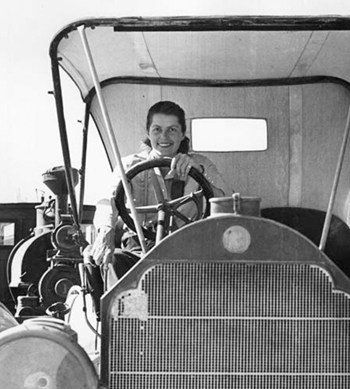
One oral history of Natalie Gignoux by Ruth Whyte on September 16, 1986. Natalie, a tall, powerful-looking woman, was the owner of the Little Percent Taxi Company back in the fifties. She talks about the early days of Aspen, the Goethe Bicentennial, the people who came and running her taxi company for 12 years, then after selling the company, she worked for the Aspen Skiing Co. until she retired and moved to Arizona.
Natalie Gignoux Interviewed by Ruth Whyte
September 16, 1986 C98_1993.040.0079
Ruth Whyte [00:00:05] …Aspen, interviewing Natalie Gignoux on September 16th, 1986. Natalie, when did you first come to Aspen?
Natalie Gignoux [00:00:16] I arrived in Aspen on Armistice Day, when it was November 11th. In 1948.
Ruth Whyte [00:00:24] ’48, in November. So the first lift…
Natalie Gignoux [00:00:30] The first lift was two years old, I suppose. And they had just finished Ruthie’s Run, and they had just finished building, um, or only a year before, I think, building the second part of Lift Number One, or Lift Number Two.
Ruth Whyte [00:00:49] Right, because when they had dedicated the lift in 1947, it was only the first half of the single lift.
Natalie Gignoux [00:00:56] Yeah. Yeah.
Ruth Whyte [00:00:58] And, um, so where did you come from and why did you choose Aspen?
Natalie Gignoux [00:01:04] That’s a story that has very little to do with skiing. My cousin had found her way here by way of Santa Fe with friends who were hooked on Aspen. I’d been living with her in New York, sharing a house or an apartment, and my aunt asked me to come back out here with her to collect her dolls and dishes and make sure that she got back to New York instead of staying out in the West. She was a commercial artist.
Ruth Whyte [00:01:32] Living here in Aspen?
Natalie Gignoux [00:01:32] She was, just temporarily. She was just visiting here in Aspen. And so I came out and I made sure that she went back, but I stayed, which is…{laughter}.
Ruth Whyte [00:01:51] Great. Well, what was…?
Natalie Gignoux [00:01:53] My first day or two in Aspen, I was a guest of a girl whose last name, I believe, was Duke.
Ruth Whyte [00:02:06] Molly Duke?
Natalie Gignoux [00:02:07] No, not Molly, it was Jane Duke, I think, who operated a little gift store for… that belonged… in the Hotel Jerome that belonged to Ruthie Brown, or Ruthie Humphreys. And we lived in the Pink House, which was Ruthie’s house.
Ruth Whyte [00:02:29] Right. Great. And so what did you… what was your first job? How did you exist here?
Natalie Gignoux [00:02:37] Well, exist is about what it was for the first little while. My cousin and I rented the old assay office, which belonged to Mrs. Shaw, and did some fixing up and stuff in lieu of paying rent. And we were experimenting with her artistic ability in trying to do hand-painted scarves for skiers that would not lose their color when you laundered them. And we did discover… my job was sort of the chemistry department, and she was the “artiste.” And we did succeed in making a formula. But then I went skiing and broke my leg. And that was the end of that.
Ruth Whyte [00:03:24] This was that first winter?
Natalie Gignoux [00:03:25] That was that first winter. I was not a skier. I mean, I was… It was, what, February 2nd, 1949, when I broke my leg.
Ruth Whyte [00:03:35] Yeah. Because you came in the fall of ’48.
Natalie Gignoux [00:03:36] I’m probably the only person who ever schussed the Snow Bowl with very little skiing experience and lived to talk about it. I did not know how to turn.
Ruth Whyte [00:03:51] Oh, dear.
Natalie Gignoux [00:03:51] It was my first trip down the mountain. Somebody talked me into going up and skiing down, so…
Ruth Whyte [00:03:57] Without any ski lessons. Oh dear.
Natalie Gignoux [00:03:59] Yeah. Without knowing what I was doing… very much.
Ruth Whyte [00:04:02] So, what do you mean that was the end of that? You didn’t leave Aspen, off course. Or did you leave for a while?
Natalie Gignoux [00:04:07] I left Aspen and went to Arizona to visit with my father until I was able to perambulate. I was down there for about three months. I came back, I got off the bus and Pepi Teichner said, “Natalie, you type, don’t you?” And I said, “Yes.” And he said, “Well, will you work for me on the Goethe Festival? Reservations?” And I said, “Well, I would, Pepi, but it’s time that I faced reality, and I think probably I’d better pack up my dolls and dishes and go over to Denver or someplace where I can get a real job.” And he said, “Well, while you’re packing, go to work for me.” So I went to work for him, supposedly part-time, which quickly worked into full-time. And then when the Goethe thing was over, then I went to work, was hired by the Hotel Jerome as a desk clerk to work on their reservations.
Ruth Whyte [00:05:06] Tell us a little about the Goethe Festival. It was in the summer of ’49?
Natalie Gignoux [00:05:11] Summer of ’49.
Ruth Whyte [00:05:13] And so you helped with the reservations?
Natalie Gignoux [00:05:15] And made the awful mistake of seating Rocky Cooper accidentally and inadvertently behind a post in the tent, which had to be very quickly changed.
Ruth Whyte [00:05:29] Oh dear. So you had a little to do with the protocol situation?
Natalie Gignoux [00:05:34] Well, we just, we didn’t know where the things were, really, until the tent was finally up. And Pop Hauser, you know, had a function. We got down there and found that we had seated her behind a tent, I mean behind one of the tent poles, so…
Ruth Whyte [00:05:49] That was the first year the tent was up, used.
Natalie Gignoux [00:05:51] That’s right. You know, the tent was built for that, was put up originally for that thingy.
Ruth Whyte [00:05:57] And then they… but they did have some music, but they brought it in from Minneapolis.
Natalie Gignoux [00:06:01] They had… I can’t remember…
Ruth Whyte [00:06:05] Oh, the conductor.
Natalie Gignoux [00:06:06] Yeah, but… and he brought his own piano. He wouldn’t… What was his name?
Ruth Whyte [00:06:17] I should know. I see his picture. I can see his picture in the museum.
Natalie Gignoux [00:06:19] Yeah, well, I can see him. I had him, transportation-wise and every other which way because he came here a couple of years.
Ruth Whyte [00:06:26] Maybe I’ll dub that in later. Anyway, uh, so you got through the summer of ’49, and as you say, then you’re another… you just got used to living here, and then all of a sudden you were working at the Hotel Jerome.
Natalie Gignoux [00:06:40] I was working at the Hotel Jerome as a desk clerk, and we were about headed into the FIS.
Ruth Whyte [00:06:47] Oh, that’s right. ’49-’50 that came.
Natalie Gignoux [00:06:49] ’49-’50. It was in, what, January of ’50 or…
Ruth Whyte [00:06:53] No, it was in February of ’50.
Natalie Gignoux [00:06:54] Well, January they started arriving and rehearsing.
Ruth Whyte [00:06:58] And training. Yeah.
Natalie Gignoux [00:06:59] Training, yeah. Rehearsing, training, whatever.
Ruth Whyte [00:07:01] That’s all right. You rehearse in the summer and train in the winter, or all year-round. Anyway, so that was an exciting time for Aspen.
Natalie Gignoux [00:07:17] Yes.
Ruth Whyte [00:07:19] 1950 FIS. Who were some of the skiers and racers that you met during that time? Do you remember?
Natalie Gignoux [00:07:27] Uh, not really. Not really. I’m trying to think of the… all I can remember now is Toni, Toni Sailer, which was way later.
Ruth Whyte [00:07:39] Yeah. Well, of course, Zeno Colo was here.
Natalie Gignoux [00:07:42] And Zeno Colo was the one who won it, and his was the name I was trying to remember.
Ruth Whyte [00:07:46] Yeah. And I think Stein Eriksen was here at that time. He started…
Natalie Gignoux [00:07:52] Yeah, he was here definitely.
Ruth Whyte [00:07:53] Yeah. And his brother.
Natalie Gignoux [00:07:56] Of course, he’s so much of a fixture in Aspen, you know, later on, that I was always surprised when he came back.
Ruth Whyte [00:08:04] And who were some of the ski school instructors your first two years here?
Natalie Gignoux [00:08:08] Well, Klaus Obermeyer was the… he was a ski instructor. And, uh, who…? There were just…
Ruth Whyte [00:08:20] Well, of course, head of the ski school was…
Natalie Gignoux [00:08:23] Well, Friedl and Fred were head of the ski school, and Ed Lynch was a ski instructor. And, uh, Morrie Shepard…
Ruth Whyte [00:08:38] Morrie Shepard, right.
Natalie Gignoux [00:08:39] …was a ski instructor. Um, Tony…. uh, Seibert. Pete Seibert was a ski instructor.
Ruth Whyte [00:08:48] Pete Seibert was here. They were all here in the early days.
Natalie Gignoux [00:08:52] I don’t know when Jack McTarnaghan came. Do you remember him? See, I was not a skier, so they were just, you know, you knew them in the… Oh, Steve Knowlton.
Ruth Whyte [00:09:05] Yeah. Well, he was more here for racing, and then he started his Golden Horn.
Natalie Gignoux [00:09:10] Yeah, but he was a ski instructor, too, for a while before he got involved with the sports shop. Golden Horn… and of course, the early days in the Golden Horn were marvelous. There’s, uh, Lane.
Ruth Whyte [00:09:27] Shady Lane.
Natalie Gignoux [00:09:27] Shady Lane.
Ruth Whyte [00:09:28] Mhm. Did the hotel provide you, then, with your own room and… did you live…?
Natalie Gignoux [00:09:35] The first 18 months I was in Aspen, I believe I moved 18 times from one unoccupied hotel room to another. Well, originally, if you count staying at the Pink House, and then we got a room in the Prince Albert, and then I moved in with some other gals… I’m not sure whether Anne Davis was in that group or not… in a house up on, just opposite Little Nell, that belonged to Henry Beck, which promptly burned down, when I was in there for about a week before we managed to burn it down.
Ruth Whyte [00:10:21] What? Did you save any of your belongings?
Natalie Gignoux [00:10:26] No.
Ruth Whyte [00:10:26] At least you got yourself out.
Natalie Gignoux [00:10:27] I got myself out and went back and found the little case that had the few precious items that I owned that had been just tossed out of the upstairs bedroom into a snowbank. I went back 3 or 4 times digging and crawling around and did finally find it.
Ruth Whyte [00:10:42] Oh. Well, was this in the summer or the winter?
Natalie Gignoux [00:10:44] In the winter. It was in January. Just oh…
Ruth Whyte [00:10:48] Now was this ’48? ’49?
Natalie Gignoux [00:10:50] Just shortly after, this was in…it was in January of ’49.
Ruth Whyte [00:10:56] The first year you were here.
Natalie Gignoux [00:10:57] The first year. I’d been here just a few months, then moved back into the Prince Albert. As a matter of fact, I rung an extra Prince Albert in there because I moved right from the penthouse in with these people.
Ruth Whyte [00:11:11] And then, you said for some reason you became skier of the week, or is this after you…?
Natalie Gignoux [00:11:15] This was as a contributor to the ski program after the jeep lift.
Ruth Whyte [00:11:22] Okay. So that’s… we’re getting ahead of ourselves. Let’s try to go chronologically. Okay. After your Hotel Jerome job, that was sort of seasonal then?
Natalie Gignoux [00:11:32] Then I got the idea that… No, that was year round. And I talked to Chuck Bishop, and I wanted to run the Sports Desk on a percentage basis and, you know, sell lift tickets and be a Main Street office for side street businesses. And he said, “Well, it’s a very good idea. But Meg and Bill Bronski already have that job,” and they didn’t work in the summertime at that point. They were just selling lift tickets in the winter, I think. And “You’re much too valuable where you are.” This is behind the front desk. Well, I was bored silly with the front desk. And icing the thermostats to bring the heat up for people who were too cold in their rooms, and they were all locked so you couldn’t do, turn it up automatically. So we used to put ice on them, cool them down so they’d bring the heat up in the hotel. Anyway, so then I quit that spring, and I started the Little Percent, which was in… well, it’s now… well it was the Whale of a Wash. It also belonged to Mrs. Shaw.
Ruth Whyte [00:12:49] For those who may not know, Little Percent was a taxi service, right?
Natalie Gignoux [00:12:53] Well, later on, but when I started it, I bought the name from Sam Howell, who had called it “A Little”… he had a little gift shop, lending library and what all in the hotel, under the stairs. And I bought the name from him for $1 and all other good and valuable consideration, just to make it legal, because he had been an entity. And my idea was to be a Main Street office for side street businesses and get people to come in. And the big gimmick was to help them get train reservations to and from Glenwood Springs and Denver. And also we’d make 1 or 2 long distance calls.
Ruth Whyte [00:13:39] So you were almost one of the first travel services here?
Natalie Gignoux [00:13:46] Yeah. And later it became Iselin Travel Service, or became a Main Street office for Iselin Travel Service. Fred was really only interested in the big grand overseas trips in the summertime. And we did all the nitty gritty stuff and got the commission from the little bitty stuff. And he made his big tours and paid for his own trips to Europe and got the major part of the commission from the big stuff. So that was fine, because there was no way that I could have done, or was interested in doing, any of the big stuff. But among the things that I represented was the “Aspen Taxi,” which never had any cars available, and it was a case of if you don’t like the way they run the railroad, build your own. I finally bought his franchises because I was so interested in the sightseeing business, and most particularly in the summer Jeep trips. That was my big forte. I got involved in that…
Ruth Whyte [00:14:57] When was the…? So were there… there weren’t any cars then that you bought from the business?
Natalie Gignoux [00:15:04] I bought an old wooden-bodied station wagon from the gentleman who owned the taxi service.
Ruth Whyte [00:15:14] Oh, so there was a taxi service?
Natalie Gignoux [00:15:16] There was a taxi service here. He had gotten his PUC license through Walter Paepcke, who’d been very instrumental in getting it out of Denver. But he didn’t… his son had always gone out with the cars, and they were always broken down. You couldn’t get anybody to do anything. He didn’t… it was awful. But the permits existed, and he had two cars. One was an old wooden-bodied station wagon, and the other one was a brown DeSoto limousine with jump seats that had two front seats and then jump seats in the way back, which were mostly in the baggage compartment. It was terrible. Terrible car.
Ruth Whyte [00:15:59] Did they use that during the Goethe Festival? How did they get people back and forth, or did they just walk?
Natalie Gignoux [00:16:04] They did their own thing. I don’t know, the first August that I owned it, this was a real landmark. I had it in the winter and the summer. And then in the month of August in 19–, um, I bought it in ‘4-, let’s see ’49… I bought it in ’50. I bought the franchises from him, or rather, I bought the two vehicles from him and then mortgaged them for enough to buy the franchises. And that first August that I owned it…I bought it from him in September of 1950. I started on my own in the spring of 1950. Am I in the right year? Yes.
Ruth Whyte [00:17:01] Yes, mm-hm.
Natalie Gignoux [00:17:03] Um, that following August, I made as much in the one month of August as he had made in the whole preceding year to the time that I bought it. So that was a landmark because it was really penny ante that they, to start with, was terribly penny ante and real hard to get going. And then it really took off like crazy. And as long as it was small enough and the town was small enough so that you could do it pretty much yourself with the assistance of a few kids like Neil Beck and his cousin, um, Paul.
Ruth Whyte [00:17:43] They were drivers for you?
Natalie Gignoux [00:17:44] They were drivers for me that first year.
Ruth Whyte [00:17:46] Were they also mechanics? That’s always important.
Natalie Gignoux [00:17:49] Roustabouts. I mean, change a tire and like that. But the mechanical work was done pretty much by Harold Motors and my pet, Martin Bishop. After he left Aspen and went back to Denver, and I got a little bigger and had more cars and could manage to do it, I hired him back and moved him. He came back to Aspen.
Ruth Whyte [00:18:12] I was going to say, I don’t remember him staying down in Denver. Yeah.
Natalie Gignoux [00:18:15] And… oh, he was over there for, I don’t know, 3 or 4 years. But I persuaded him to come back and built the little garage for him so he could take care of my taxicabs. But earlier, early on, it was just hope that you could keep them running one way or another. Little stuff I could do myself, but anything I didn’t understand very much…
Ruth Whyte [00:18:38] So how long did you have the Little Percent taxi service? And how many cars did you end up with? Or taxis?
Natalie Gignoux [00:18:46] Well, I’ve kind of forgotten, but the Little Percent, um, I started it in the spring of 1950, and I sold it in December… I quit operating on the 14th of December 1962. And at that time, I had 12 vehicles that were associated with the taxi service, three of them were jeeps, five were limousines. Oh, two were jeeps, at that point, I think. I don’t know.
Ruth Whyte [00:19:22] Well, anyway…
Natalie Gignoux [00:19:24] Anyway, but then I had the little checker cabs and uh, I think I had two of the checkers. But then I went… then I also had Hertz Rent-a-Car, and I owned 12 relatively up to date Chevrolet sedans.
Ruth Whyte [00:19:47] Where was your office then? Did you still have it on Main Street or…?
Natalie Gignoux [00:19:48] No, no.
Ruth Whyte [00:19:49] You moved to…?
Natalie Gignoux [00:19:50] No, I built, in ’51 or ’52, I built the little place that is between the Golden Horn and there was a bus station there. Now it would be on the mall.
Ruth Whyte [00:20:06] Right. It would be…I think there’s a t-shirt…
Natalie Gignoux [00:20:07] Right across from Doctor Baxter’s, Barnard Baxter’s office.
Ruth Whyte [00:20:11] Right. I think there’s a t-shirt shop there, in between them.
Natalie Gignoux [00:20:16] And the little tiny building has been very much enlarged. We had a little garden at the side, and the taxi drivers and I used to have dinners out there in the summertime on a picnic table, and it was very pleasant, considering that I lived behind the office for a good many years. 13 years, I think it was.
Ruth Whyte [00:20:34] So from a single woman business, then you ended up hiring… When was your…?
Natalie Gignoux [00:20:40] The last year that I had the taxi business, and I think one of the things that drove me out of the taxi business was that I had to fill out 54 withholding forms for transient drivers. We tried to stay open for three shifts a day, and you had to keep all the cars on the road, and you had a whole different crew in the winter than you had in the summertime. The whole business.
Ruth Whyte [00:21:04] Yeah. Well, tell us about the Jeep lift, which was in 19–, I think it was 1954?
Natalie Gignoux [00:21:11] That’s what I’m thinking, yes. It’s in one of those…. it’s on the dateline in one of those articles.
Ruth Whyte [00:21:18] Just exactly what happened to the lift that made it… and what lift was it?
Natalie Gignoux [00:21:23] Well, it was the Number One lift. It was the one that took off from downtown. And, I don’t know, I’m not enough of a mechanic to really know what happened, but the main bullwheel, I guess, broke a cog or broke a tooth and that kept it going. I ought to read that magazine article to find out what it was that happened. But anyway, originally, they thought it would only be down for a couple of hours, and then they discovered what was wrong, and they had to get the part out from Denver, and it couldn’t be flown in and had to come over by truck. And when they could get… I think what happened, they had to take the bull wheel over there and have it repaired and then bring it back. And this wound up being, uh, was it a grand total of five days, I think, that the lift was down? And everybody was leaving town like crazy, and we said, “Well, maybe we can get everybody to use their jeeps.” Red Rowland went up and opened up the back road to the Sundeck, and…
Ruth Whyte [00:22:33] I remember he plowed it out.
Natalie Gignoux [00:22:34] He plowed it out, yeah. And we used everything that we could find, got all kinds of… everybody who had a four-wheel drive vehicle practically. I think there were 35 or 36 jeeps, finally, that got involved.
Ruth Whyte Great.
Natalie Gignoux [00:22:53] We made five round trips a day, but we had to do it in convoy fashion. They all had to leave… it was only a one way road.
Ruth Whyte [00:23:02] Somebody had to organize it all.
Natalie Gignoux [00:23:04] Well, that was my job.
Ruth Whyte [00:23:04] So once they got up there, they could ski the top part and use Number Two lift. And Number Three lift was in by then, wasn’t it?
Natalie Gignoux [00:23:12] No.
Ruth Whyte [00:23:12] It was not.
Natalie Gignoux [00:23:13] No.
Ruth Whyte [00:23:14] So only Number Two.
Natalie Gignoux [00:23:15] What happened… we were taking… people would come… {brief break in recording} I think we were taking the same people up five different times. They were skiing all the way down to the bottom. I don’t… I’m not sure… I don’t think the second half of the lift was running either.
Ruth Whyte [00:23:34] Well, in those days, there wasn’t much… there was only one trail to it too, I mean, as there is now, um, from the top.
Natalie Gignoux [00:23:40] Anyway, we were meeting them at the bottom of Little Nell and loading up the “bathtub,” the Saab, as we used to call it, which was a sawed off laundry truck, with as many people as we could get in, standing up and holding their skis. And anything else that was available. There were… there was, um… T Lazy Seven had their big old cattle truck down there, and they loaded that up, and we’d shuttle the people out to the bottom of the Little Annie Road, to the Midnight Mine Road, and load them into the jeeps, take them to the top of the mountain, and the first jeep up had to wait for the last jeep to get up because they couldn’t turn around and come back. And they would come back down to the bottom, and by that time we’d have another load ready to go, and people were making five round trips.
Ruth Whyte [00:24:42] Were the tourists happy about it? Were they delighted? No doubt.
Natalie Gignoux [00:24:45] We got some pretty good publicity, and I can attest to this just simply because in the middle of the night, the third day of the jeep lift, I went to Glenwood Springs to take some people down to the train, and I picked up a gentleman who got off the train and wanted to go to Aspen. And on the way up I said, “How come you’re going to Aspen? Don’t you know that the lift is broken down?” And he said, “Oh, yes, but they’ve got this marvelous jeep lift going, and I want to get in on that.”
Ruth Whyte [00:25:20] An entirely new adventure, huh? And so did they charge for this?
Natalie Gignoux [00:25:25] We shook a donation box as people were getting into the trucks and the busses… or the trucks is what it amounted to. I guess that Saab could rate as a bus. Not the jeeps. It was here in town that we shook a donation box at them and suggested that they could pay a dollar. And that just barely covered the expenses of oil and gasoline. We had to take a compressed air tank and gasoline cans and everything out from town for the jeeps as they would run out. And some of them, I remember Ginny Chamberlain blew the engine on her Carry All Jeep almost. I mean, it just sort of ran out of oil, and there was lots of blue smoke and stuff. It was kind of a bad scene. Most of the people were very good. They footed their own bills. We tried to get a donation from the Ski Corporation or something later, but they were too busy repairing the lift with the money. They turned us down. We had hoped to reimburse some of the people who had real problems with their jeeps because of overstraining them.
Ruth Whyte [00:26:39] Well, who else helped out? Besides Ginny Chamberlain. Ginny Horne, her partner in The Prospector.
Natalie Gignoux [00:26:47] Just about anybody who had a Jeep and any time to drive it.
Ruth Whyte [00:26:51] Because what other lodges? Was the Norway Lodge here then?
Natalie Gignoux [00:26:54] No, I don’t think… it wasn’t…. It was mostly, you know, friends, Romans and countrymen. It wasn’t necessarily lodge owners. I really can’t remember who all did it. Of course, Paul Wirth was, had his own vehicle. No, Paul… was Paul up there then? No, Howard Awrey was up there then, wasn’t he?
Ruth Whyte [00:27:17] Was he running the Sundeck then? Or Howard Awrey?
Natalie Gignoux [00:27:19] Howard Awrey was, I think, and I think they lived up there. Howard and Jean Awrey. I don’t remember. I remember Ginny Chamberlain because I remember that her jeep blew up. Most of the jeeps were just open jeeps, didn’t have tops on them, I think because you could get more people in if you didn’t have a top.
Ruth Whyte [00:27:43] Sure. Well, then you had their skis that stuck up.
Natalie Gignoux [00:27:45] Yeah, that’s right, they stuck up every which way.
Ruth Whyte [00:27:48] Yeah. And the weather held out. There wasn’t any stormy days?
Natalie Gignoux [00:27:53] No, not that I recall. Of course, what was going on, I was down at the bottom, running around like crazy, trying to make sure that the gasoline and air tanks and everything else went out on the next trip. And making sure that… I was working night and day, all five days, getting people to go out. I’m trying to think. I think the Norway Lodge was involved.
Ruth Whyte [00:28:23] I think Les Gaylord owned it then.
Natalie Gignoux [00:28:25] Yeah, Les Gaylord.
Ruth Whyte [00:28:27] I don’t think the O’Rears were there yet.
Natalie Gignoux [00:28:29] The who?
Ruth Whyte [00:28:30] O’Rears finally came in and bought that.
Natalie Gignoux [00:28:34] Well, wasn’t it the Masons?
Ruth Whyte [00:28:35] Then maybe the Masons came. I don’t know whether the Masons were first, or…
Natalie Gignoux [00:28:39] I think Masons were just after Les Gaylord.
Ruth Whyte [00:28:42] Oh. Well, you would know. Yeah, that sounds right. Okay, then… So you sold your career, was it ’62? Do you remember any…?
Natalie Gignoux [00:28:56] Which one? Oh ’62.
Ruth Whyte [00:28:59] Any interesting stories of, while driving the jeeps, was there any…?
Natalie Gignoux [00:29:07] Oh, most of that was summer stuff. The only really jeep… there was one winter when I was still in the, in where the Whale of a Wash is now, in that little building, that we had something like 62 inches of snow in three days, and everyone in the world was stuck. We were the only vehicles that were running. And the reason we were running was I was sending out one seven-passenger limousine with everybody that it could carry to go somewhere. And immediately behind it, I was sending a Jeep to pull it out of the snow banks on the way around.
Ruth Whyte [00:29:52] When was this?
Natalie Gignoux [00:29:53] This was in early January, as I recall.
Ruth Whyte [00:29:56] I bet it was ’56 or ’57.
Natalie Gignoux [00:29:58] No, no. Because it was before I had built up on Mill Street.
Ruth Whyte [00:30:03] Oh, even before the jeep lift?
Natalie Gignoux [00:30:04] Yeah, yeah.
Ruth Whyte [00:30:06] ’54. Oh.
Natalie Gignoux [00:30:08] And then there was…
Ruth Whyte [00:30:11] It wasn’t during the FIS, it wasn’t in 1950. Besides, you didn’t have it then. Okay. It was…it had to be…
Natalie Gignoux [00:30:19] I built the office up there in ’52. I moved in in the spring.
Ruth Whyte [00:30:23] I bet it must have been the winter of ’53 then.
Natalie Gignoux [00:30:26] No, because it was when I was still on Main Street. And I ended up there in ’52. So it had to be… it could have been ’51 to ’52, that New Year’s period.
Ruth Whyte [00:30:40] Yeah, then it had to be there because 1950 was the FIS. And then you said you moved.
Natalie Gignoux [00:30:45] Yeah. ‘5-, well, in ’52, in the spring, was when I moved into the office.
Ruth Whyte [00:30:51] Well, it had to be the ’51-’52 year, so… Oh, that’s interesting… 62 inches of snow.
Natalie Gignoux [00:30:58] Something like that, in one three-day period. And it was just miserable. And every so often you’d go around… they didn’t plow the side streets. They just plowed the state highways through the middle of town. The rest of the street survived by being pretty much packed down. Well, come spring in that year, there were so many… I remember at one point we turned a corner, probably could have been this corner right down here, you know, in front of the Anderson’s house, that you turned the corner and the snow had rotted, and there was just no, nothing but China underneath. You’d go down 12 or 14 inches with one wheel where it hit a soft spot and just go “thud” because the street was way down under all the packed snow. It got to be… everybody’s pipes froze.
Ruth Whyte [00:31:47] So you really enjoyed… You said your forte was the jeep trips in the summer, which…
Natalie Gignoux [00:31:54] Pretty much the summer jeep trips, yeah.
Ruth Whyte [00:31:55] Must have been really fun.
Natalie Gignoux [00:31:55] That was what I really enjoyed doing.
Ruth Whyte [00:31:57] Oh yeah. And what… because a lot of those jeep roads are not open now. What were some of the jeep trips you took, to where?
Natalie Gignoux [00:32:04] Well, we had a little folder that we put out. We did sedan trips all the way up to Marble, you know, and Independence and Leadville and Ashcroft. And in the winter time, we used the jeeps to take people to and from dogsledding in Ashcroft, in the winter, all through the taxi service. We also used them as a school bus one year to get Stuart’s kids to school. But the jeep trips in the summertime, we’d take them… Taylor Pass was very popular. A wildflower trip that went up the Midnight Mine Road and came down the front. Then we also did an evening steak fry trip, “sunset picnic,” we called it. We usually went up the front and down through Little Annie for, to see the lupine, which are just simply marvelous. And we’d stay there and cook steak over charcoal. We took our own little charcoal thing.
Ruth Whyte [00:33:06] Did you happen to do that on what we call Little Annie Picnic Point? Do you know where that is?
Natalie Gignoux [00:33:10] Yeah, that’s where we used to do it. Yeah. Pretty much. And watch the sunset and then come back and go down the Midnight Mine Road or go all the way down Little Annie. I think most of the time we went all the way down Little Annie.
Ruth Whyte [00:33:29] Yeah, there’s two roads there.
Natalie Gignoux [00:33:32] And come back to town. The reason we took charcoal was with no water back there and afraid of… we took along fire extinguishers and everything else, but we were afraid. With the little charcoal burner thing, you could roll up the charcoal in foil and totally smother it by the time you left, without worrying about a fire or anything like that.
Ruth Whyte [00:33:53] Oh, good for you.
Natalie Gignoux [00:33:55] But we’d go up to Gold Hill. We’d go up to Lincoln Reservoir and Ruby and, uh, we used to go up to Pearl Pass to Montezuma Basin. Montezuma Mine, actually. Never did get up to the basin except on foot, because the road didn’t go that far. But those were the real popular ones.
Ruth Whyte [00:34:19] Did you ever go all the way to Crested Butte?
Natalie Gignoux [00:34:23] Oh, yes. That was a fall trip. We used to… I had several trips that I took in the fall. Went over Pearl Pass down to Crested Butte, and then we would go around over Cottonwood Pass through Tincup, come back over Independence…
Ruth Whyte [00:34:50] Yeah. Because you end up in little towns called, like Saint Elmo.
Natalie Gignoux [00:34:56] That’s right. Saint Elmo.
Ruth Whyte [00:34:57] But that would be via…
Natalie Gignoux [00:34:59] It’s Cottonwood Pass.
Ruth Whyte [00:35:00] You would have to go….
Natalie Gignoux [00:35:01] Taylor Pass.
Ruth Whyte [00:35:03] Taylor Pass.
Natalie Gignoux [00:35:05] But you could go around. We would go over either of several different ways. There was a way to go from… now I can’t… if I had the maps here, I could show you, but I can’t tell you by name where they are now. But you would go from Crested Butte and you go down the creek a little ways and you “hang a left,” as my niece would say, and you would drop over into the Taylor River drainage. And then you could come back over Taylor Pass if you wanted to, or you go on down and go over Cottonwood Pass into Saint Elmo and come back over Independence. We used to make several… we used to make a three day trip.
Ruth Whyte [00:35:52] And that’s the same road?
Natalie Gignoux [00:35:53] Took the Stranahan family a couple of times on overnights for 2 or 3 days. One way, we would go over Schofield Pass from Marble and then back over Pearl, or over Pearl and back over Schofield. Another way: go over Taylor and back over Cottonwood and back in over Independence.
Ruth Whyte [00:36:17] That’s a lot of driving. Then you’d camp overnight?
Natalie Gignoux [00:36:20] We’d spend three days. Exploring every mine, every hole in the wall, everything that we could find.
Ruth Whyte [00:36:28] Okay, then ’62, you sold your business to…
Natalie Gignoux [00:36:34] Well, Harold Lesh bought it. He couldn’t stand the competition with his bus line, so that’s why he bought it. Then he junked the name and he junked all the sightseeing. And he just wanted the limousine service to and from Denver and Glenwood.
Ruth Whyte [00:36:50] I see, and so he just…
Natalie Gignoux [00:36:53] See, I bought the Glenwood Taxi, too, later on.
Ruth Whyte [00:36:55] Oh you did?
Natalie Gignoux [00:36:56] Yeah. And we had them coming and going. It was a kind of a disaster in a way, but it gave us the right to pick up anywhere in Pitkin, Garfield, or Eagle County, or in Denver, as long as one end of the trip was Pitkin, Garfield or Eagle County, and that included Vail, because Vail is in Eagle County.
Ruth Whyte [00:37:14] Right. But Vail wasn’t going then yet.
Natalie Gignoux [00:37:17] Well, Vail was getting going.
Ruth Whyte [00:37:19] Vail…what year…?
Natalie Gignoux [00:37:21] Vail was being built. It was…
Ruth Whyte [00:37:23] Early 60s, wasn’t it? Okay. So then, did you leave Aspen?
Natalie Gignoux [00:37:29] No.
Ruth Whyte [00:37:34] No, you stayed.
Natalie Gignoux [00:37:35] No. I went to work for the Hotel Jerome, and then I worked for four years at the Aspen Clinic. And then…. I didn’t go to work at the Hotel Jerome, I went to work at the Meadows, the Aspen Meadows. Desk clerking again. Everything comes full circle.
Ruth Whyte [00:37:50] Right. Oh, funny. So you started that…
Natalie Gignoux [00:37:53] I was working at the Aspen Clinic for about four years as the business manager for Doctor Oden, Doctor Whitcomb and Doctor Gould. Then I quit that, and I thought, “Well, I’m tired of working that hard. I want something where I work only in the winter and I can play in the summertime.” And I went… I had decided… this was in early spring, and I had decided that…
Ruth Whyte [00:38:19] So what year? You worked four years. So now we’re…
Natalie Gignoux [00:38:22] We’re in 1968, I guess, ’66, ’67… Paul Wirth had been selling tickets at the Number One lift. Ginny Chamberlain was the ticket sales manager at the Ski Corporation. And Ginny… Paul… something happened at the Sundeck, and Paul had to go up there and take over. They had had a couple there who were not a great success. And Paul went up to take care of that, and Ginny needed a ticket seller part-time at the Number One lift, and since she and I were very good friends, she said, “Will you go to work for me as a ticket seller up there? You’re the only person I can think of that I can bother to try and begin to break in this late in the season.” This was in… it was just for the month of March and whatever part of April was going on. So I did it. And then in the fall… now I had worked… when did I…? In the fall, I went to work for her again in the main ticket office when it was there in the Tom Thumb building. That was several years before… that was before I went to work for the clinic. Because I went from there. I had two jobs at once for a while. I was… they had difficulty at the clinic with someone who could operate their posting machine, and I was going in and operating their posting machine when I wasn’t working at the Ski Corporation. So for one winter, I worked with Ginny at the Ski Corporation. That spring, I went to the clinic. Then I was there for about four years, and then Ginny asked me to go up to the Number One lift after I had quit them. And then I took the summer off. And then in the fall, I went back to work.
Ruth Whyte [00:40:21] What year are we now?
Natalie Gignoux [00:40:22] We are now in ’66, ’67. And I worked with Ginny in the main ticket office, which was then…
Ruth Whyte [00:40:39] The Country Store building?
Natalie Gignoux [00:40:41] In the Country Store building, you know, in the back of the Country Store. And I went to work there with her, and when she retired in ’68, I inherited her job. So for… from ’68…
Ruth Whyte [00:40:57] As ticket manager?
Natalie Gignoux [00:40:59] As ticket manager. The job had several different titles because there was inflationary price restrictions. You couldn’t get a raise unless you got a different job. So I was head ticket seller when I started, and then I got to be manager, ticket sales manager, and then manager of ticket sales. And I don’t know, anyhow, it was all the same business. But every time I got a raise, I got a different…
Ruth Whyte [00:41:27] And so, who was president of the Ski Company?
Natalie Gignoux [00:41:29] Darcy Brown was, during my whole era. He left, he retired, what, the year after I did. I retired in the spring of ’77. And that was my last year on the job.
Ruth Whyte [00:41:40] So you worked as ticket manager, head ticket officer?
Natalie Gignoux [00:41:44] Yeah, whatever you call it.
Ruth Whyte [00:41:45] So then about ’68 to… what did you say when you retired?
Natalie Gignoux [00:41:50] From ’68 to ’77. Just about ten years.
Ruth Whyte [00:41:53] About ten years?
Natalie Gignoux [00:41:54] Yeah. That’s about all you could stand, taking the flak from the public. I understand now that the ticket sales manager is pretty well insulated, doesn’t have to be an adjustment office anymore. You’ve got to be a statistician, which I never was any good at anyway.
Ruth Whyte [00:42:10] All right. But it’s…
Natalie Gignoux [00:42:13] That’s when I took up skiing, by the way.
Ruth Whyte [00:42:16] Oh. You did?
Natalie Gignoux [00:42:16] I took up skiing after… well, I took up skiing the year that… when I could get free lessons and everything. Because I was working for the Ski Corporation in the winter after I had sold the taxi business, which would have been ’63-’64, I think. ’62-’63, I was at The Meadows. And then ’63-’64 was the winter I was with Ginny in the Ski Corporation office, so it had to be ’68 that I went up to Number One Lift. But when I was working for the Ski Corporation that winter, then I got free ski lessons and free lift ticket and the whole business. So then I could take up skiing, and I skied minimally until I went back to work for the Ski Corporation again.
Ruth Whyte [00:43:03] Mhm. Did you enjoy that?
Natalie Gignoux [00:43:07] Oh, yeah. Yeah. Yeah. But toward the end when we had Snowmass and everything else going on, I had to ski because there were lifts that you couldn’t get to unless you skied. Down at the bottom of Campground.
Ruth Whyte [00:43:19] To distribute the tickets.
Natalie Gignoux [00:43:21] Well, you could distribute them, but you couldn’t check up. Distribution was easy, but… I could get down to Campground by riding down on the lift, you know. The lifts go both ways, but it was rather ridiculous to have them stop at the top and bottom to get me on without skis on.
Ruth Whyte [00:43:36] Yeah.
Natalie Gignoux [00:43:38] But I enjoyed it. If my conscience was clear, if there wasn’t anything drastic going on, then I really enjoyed the skiing. But when I was having to ski in order to get there, I didn’t like it. I’m not an all weather person. I’m strictly a fair weather friend, which is why I’m now spending the winters in Arizona and the summers in Glenwood Springs.
Ruth Whyte [00:44:00] So. Okay, so you left the Ski Company in…?
Natalie Gignoux [00:44:05] I left. I retired officially, what, two days? Well, right after the lift closed in 1977.
Ruth Whyte [00:44:14] 1977.
Natalie Gignoux [00:44:14] As soon as I could clean up the office and got out.
Ruth Whyte [00:44:18] Yeah. And is that when you started going to Aspen (probably meant Arizona), or did you leave Aspen then or…?
Natalie Gignoux [00:44:21] No, that’s when I left. Well, I had sold my house out at White Horse Springs, and I lived in the backyard of Anne Lisa Parker up there. They had rented the property, a piece of property up there, belonged to the Moores, I think. And I had my little travel trailer parked in their yard with electric wires running from their house for about a month until the weather cleared up enough so that I could leave. I spent that summer traveling around and moved into my Arizona home for good that fall. I had owned it for over a year when I moved in it.
Ruth Whyte [00:45:00] You took up golf, didn’t you?
Natalie Gignoux [00:45:01] Oh, I took up golf before I left Aspen. I took up golf in the early ’70s. ’70, ’71. I had too many toys, between the horses and the boats and the golf course.
Ruth Whyte [00:45:10] Yeah. When did they have… was there a golf course here?
Natalie Gignoux [00:45:13] Yeah.
Ruth Whyte [00:45:14] I’m trying to remember when they put that golf course in.
Natalie Gignoux [00:45:16] Oh, that had been here for years before I took up the game of golf, but they rebuilt it the year I left. That golf course, when I came back in ’78, there was no golf course here because they were making an 18-hole golf course.
Ruth Whyte [00:45:30] Yeah. At first it was a nine hole. Yeah.
Natalie Gignoux [00:45:33] And then it was out of commission for two years. If you wanted to play in Aspen, you had to play at Snowmass. A lot of the Aspen girls were going down to West Bank in Glenwood. And that’s the story.
Ruth Whyte [00:45:44] Well that’s great. Thank you. Natalie.
Natalie Gignoux [00:45:46] You’re welcome.
Ruth Whyte [00:45:46] We’ll go have lunch. {break in recording}
Ruth Whyte [00:45:50] We have one more story to tell about Natalie becoming skier of the week without even putting on skis. That was in 1954, right?
Natalie Gignoux [00:45:58] It was in 1954, after the jeep lift. I was… Fred and Friedl made me skier of the week. And I believe I’m the only strictly non-skier who was ever made skier of the week. I’m probably the only… one of the few people you’ll ever meet who ever lived 15 years in Aspen without putting on skis.
Ruth Whyte [00:46:19] Oh yeah, we had to record that for sure. Okay, thanks Natalie. {break in recording}
Unknown Female [00:46:23] Another story that Natalie told me, about the Gary Cooper family, when they arrived in Glenwood via the train, she went down to pick them up in her taxi. Drove back. Just as they went across the Hunter Creek Bridge, Natalie had a flat tire. They got out and….
{End of recording}
Natalie Gignoux [00:46:53] It was just for the month of March and whatever part of April was going on. So I did it. And then in the fall, now I had worked…When did I? The fall I went to work for her again in the main ticket office, when it was there on the Tom thumb building.
Natalie Gignoux [00:47:20] That was that was several years before. That was before I went to work for the clinic. Because I went from there. I had two jobs at once. For a while I was they had a difficulty at the clinic with someone who could operate their posting machine, and I was going in and operating the posting machine when I wasn’t working at the Ski Corporation. So for one winter, I worked with Ginny at the Ski Corporation. That spring I went to the clinic then, I was there for about four years, and then Ginny asked me to go up to the number one lift after I had quit them. And then I took the summer off. And then in the fall, I went back to work.
Ruth Whyte [00:48:00] What year are we now?
Natalie Gignoux [00:48:02] We are now in, uh, 66, 67, 62. 66. 67? .
Ruth Whyte Yes.
Natalie Gignoux [00:48:13] And I worked with Ginny in the main ticket office, which was then.
Ruth Whyte The Country Store building?
Natalie Gignoux [00:48:21] The Country Store building in the back of the Country Store. And I went to work there with her. And when she retired in 68, I inherited her job. So for.
Ruth Whyte [00:48:37] Ticket manager?
Natalie Gignoux [00:48:39] Ticket manager, the job had several different titles because there was inflationary price restrictions. You couldn’t get a raise unless you got a different job. So I was head ticket seller when I started and then I got to be a manager, ticket sales manager and then manager of ticket sales. And I don’t know, anyhow, it was all the same business, right? But every time I got a raise, I got a different.
Ruth Whyte [00:49:06] And so who was president of the company?
Natalie Gignoux [00:49:08] Darcy Brown was, was during my whole era. He left. He retired what, the year after I did. I retired in the spring of 77. That was my last year.
Ruth Whyte [00:49:20] So you worked as his ticket manager? Head ticket office?
Natalie Gignoux [00:49:23] Yeah, whatever you call it.
Ruth Whyte [00:49:26] So, then about 68 to. When did you say when you returned from?
Natalie Gignoux [00:49:30] 68 to 77? Just about ten years.
Ruth Whyte [00:49:33] About ten years?
Natalie Gignoux [00:49:33] Yeah. That’s about all you could stand taking the flak from the public. I understand now that the ticket sales manager is pretty well insulated. Doesn’t have to be an adjustment officer anymore.
Natalie Gignoux [00:49:46] You’ve got to be a statistician. Statistician. Which I never was any good at anyway.
Ruth Whyte [00:49:50] Alright.
Natalie Gignoux [00:49:51] But it’s the project. That’s when I took up skiing, by the way.
Ruth Whyte [00:49:55] Oh. You did?
Natalie Gignoux [00:49:56] I took up skiing after. Well, I took up skiing the year that, uh, when I could get free lessons and everything. Because I was working for the ski corporation that the winter after I had sold the taxi business, which would have been 63, 64, I think 62, 63. Was it the Meadows? And then 63, 64 was the winter I was with Ginny and the Ski Corporation office, so it had to be 68 that I went up to number one lift. But, um, when I was working for the Ski Corporation that winter, then I got free ski lessons and free lift ticket and the whole business, so then I could take up skiing, and I skied minimally until I went back to work for the Ski Corporation again.
Ruth Whyte [00:50:45] Well, did you enjoy that?
Natalie Gignoux [00:50:47] Oh, yeah. Yeah. But toward the I mean, toward the end, when we had snow masks and everything else going on, I had to ski because there were lifts that you couldn’t get to unless you ski down at the bottom of Campground.
Ruth Whyte [00:50:59] And did it?
Natalie Gignoux [00:51:01] Well, you could distribute it, but you couldn’t check up. Distribution was easy, but I could get down to Campground by riding down on the lift. You know, the lifts go both ways, but it was rather ridiculous to have them stop at the top and bottom to get me on without skis on. But I enjoyed it. If my conscience was clear, if there wasn’t anything drastic going on, then I really enjoyed the skiing. But when when I was having to ski in order to get there, I didn’t like it. I’m not an all weather person. I’m strictly a fair weather friend, which is why I’m now spending the winters in Arizona and the summers in Glenwood Springs.
Ruth Whyte [00:51:40] So. Okay, so you left the Ski Company?
Natalie Gignoux [00:51:43] I left, I retired officially, what, two days? Well, right after the lift closed in 1977.
Ruth Whyte [00:51:53] 77? Was that?
Natalie Gignoux [00:51:55] Clean up the office and got out.
Ruth Whyte [00:51:57] Yeah. And is that when you started going to Aspen, or did you leave Aspen then or you?
Natalie Gignoux [00:52:01] That’s when I left. Well, I had I had sold my house out at White Horse Springs and I lived in the back yard of, of, uh, Annalisa Parker up there. They had rented the property piece of property up there belonged to the Moores, I think. And, um, I had my little travel trailer parked in their yard with electric wires running from their house for about a month until the weather cleared up enough so that I could leave. I spent that summer traveling around and moved into my Arizona home for good that fall. I had owned it for over a year when I moved in, it.
Ruth Whyte [00:52:40] You took up golf.
Natalie Gignoux [00:52:41] And I took up golf. Took up golf in the early 70s, 70- 71 had too many toys. The horses and the boats and the golf course.
Ruth Whyte [00:52:49] Yeah. When did they have. Was there a golf course here?
Natalie Gignoux Yeah.
Ruth Whyte [00:52:54] I’m trying to remember when they put that golf course.
Natalie Gignoux [00:52:55] Oh, that had been here for years before I took up the game of golf, but they rebuilt it the year I left. The golf course when I came back in 78 there was no golf course here because they were making an 18 hole golf course.
Ruth Whyte [00:53:10] At first it was a nine hole.
Natalie Gignoux [00:53:11] YeahAnd then it was out of commission for two years. If you wanted to play in Aspen, you had to play at Snowmass. A lot of the Aspen girls were going down to West Bank in Glenwood and that’s the story.
Ruth Whyte [00:53:23] Well that’s great. Thank you, Natalie.
Natalie Gignoux [00:53:25] You’re welcome.
Ruth Whyte [00:53:26] We’ll go have lunch.
Ruth Whyte [00:53:29] We have one more story to tell about Natalie becoming skier of the week without even putting on skis. Well, that was in 1954, right?
Natalie Gignoux [00:53:38] It was in 1954, after the jeep lift. I was Fred and Friedl made me skier of the week. And I believe I’m the only strictly non skier who was ever made skier of the week. I’m probably the only one of the few people you ever meet who ever lived 15 years in Aspen without putting on skis.
Ruth Whyte [00:53:58] Oh yeah, we had to record that for sure. Okay, thanks. Another story that Natalie told me about the Gary Cooper family when they arrived in Glenwood via the train, she went down to pick him up in her taxi, drove back just as they went across the Hunter Creek Bridge. Natalie had a flat tire. They got out and.