Oral History
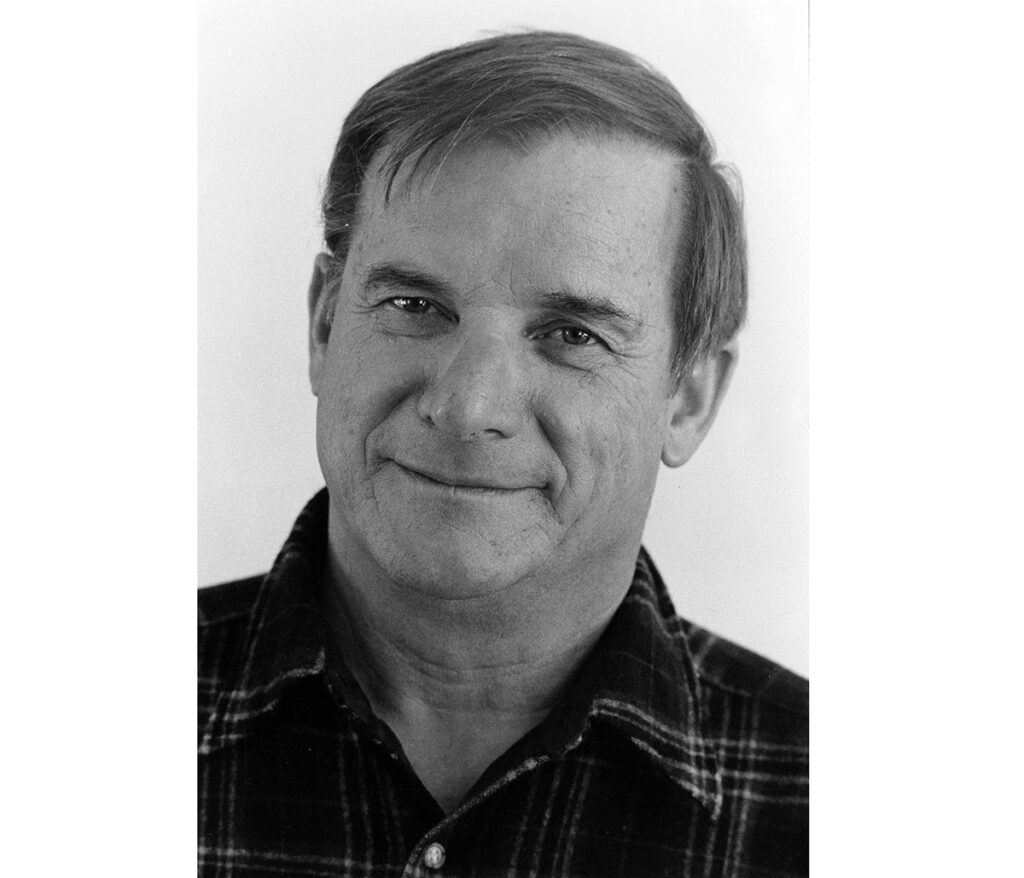
Max Marolt
One 1 hour oral history interview with Max Marolt by Larry Fredrick on December 20, 1995. The subject of the interview is buildings in Aspen and how they have changed. It is part of the Architectural Survey Oral History Project.
Max Marolt
Interviewed by Larry Fredrick
December 20, 1995
C140_1995.088.0001
Max Marolt [00:00:13] …mines on a lease basis. They’d go in, and they’d lease an area and high grade it, haul the high grade out, and co-op a rail car and load the rail car and ship the ore into usually Denver.
Larry Fredrick [00:00:34] What kind of businesses were here?
Max Marolt [00:00:37] Just the very basic businesses. We had a gas station or two, a couple, with a garage connected. A couple of grocery stores that had to compete very hard for market share. And we had a dry goods store. I remember the dry goods store. My mother worked in that. And, you know, that was about all. The light company and the water company. We did have a hardware store.
Larry Fredrick [00:01:15] Did you have a favorite business or a favorite building that you can remember at that time?
Max Marolt [00:01:21] You know, I kind of had favorite buildings in those days because, you know, as I say, the downtown was vacant, and the buildings were vacant. And as a kid, you know, we were…or as a group of kids, we would go into these buildings, and we would go through all the rooms, and the windows would be broken out, of course. And one that I remember pretty distinctly was the Opera House. You know, that had been gutted by fire, and the only thing really left in the Opera House was the stage and the balcony, and the rest was just a cavern all the way to the basement. But somewhere around probably the time I was born, they built a floor in the bottom part over the basement, and they decked that out over the top and made an area which became a grocery store later, and also the library. The library was on the corner, and that area was kind of redone after the fire just to house those two facilities.
Larry Fredrick [00:02:42] So you’ve seen a lot of buildings disappear. Are there any buildings or structures that you really miss that you wish were still standing?
Max Marolt [00:02:52] Yeah. The building that I wish was still standing, that I miss on occasion, and… in fact, two buildings are the brick chimneys that were connected to the lixiviation works on the bank, out by the Marolt Barn and Holden Lixiviation Works. Those were pretty unique and quite beautiful. You know, they were square brick, and they tapered up to the top and, you know, they were tall, and you could see them from all over town. And if you were driving up the valley, you’d see them; if you were driving out Main Street particularly, you would see them. They had their logo on the top of one, you know. It was made out of copper and would stand out pretty well. And those two buildings, they tore down, they were going to try to salvage the brick. And this happened, you know, when the town started to recoup, and, you know, there started to be a building industry again. And they thought they could recoup the bricks and use them in the… and sell them and use them in the building industry. By the time they got the things torn down, the brick was just powder. There was nothing left of it. In one instance, they built a series of ramps on the inside of the chimney and dropped the bricks down, and they’d go from boom, all the way to the bottom and broke up. And the other one, they drilled holes in the bottom and blasted it. And I remember when they blasted that down. It came down.
Larry Fredrick [00:04:41] Now, they started to tear down buildings. When did you see the people begin to get a sense of the heritage and the need to save some of these buildings?
Max Marolt [00:04:51] Well, that started in 1946/1947, you know, after the war, when the guys from the ski troops came here and when Paepcke, of course, Walter Paepcke came to town, you know, the property took on certainly value for the first time in a long time. You know, a lot of it had been left in lieu of paying the taxes on it and just left to deteriorate and to fall apart. And in about 1946/47, you know, the value started to come back to some of the buildings because of the fact that Walter Paepcke was buying a lot of them for back taxes in many cases. And then, you know, we started to get a feeling for the houses first, and then the infrastructure and the buildings downtown.
Larry Fredrick [00:06:02] Are there any buildings downtown today that you might think are not being used to their best advantage, or should be taken care of better or improved on?
Max Marolt [00:06:16] Well, I thought that of City Hall for a long time, and I’m not so sure that they’ve done exactly the right thing with City Hall. You know, the City Hall is kind of a unique building, and in that building, you know, it was stressed and structured, you know, to be an auditorium. And it had a parquet floor in it, you know, that they used for a variety of things, originally for the Armory. And I always felt that, you know, in a restructuring or a maintaining and upkeeping type of situation, you know, that that probably should have been kept an auditorium, you know, and I thought that they probably should build a new City Hall somewhere and use that for something else. And, you know, as a result, you know, it really lost a lot of its initial meaning because the historical aspect of that was certainly the design and structure and really the quality of product that was incorporated into the structure. And that’s, of course, all lost because it’s all covered up. However, they could gut it and find all of that because when they were working on City Hall in the restructuring the floor and everything is still in it. And all of the beams, the open beams are still there.
Larry Fredrick [00:07:51] Well, going, stepping forward a little bit, are there any buildings that have been built recently that you think might be of historic significance, say 50 to 100 years from now? Modern buildings.
Max Marolt [00:08:05] You know, Larry, compared to the old original buildings, there aren’t. Because I think the emphasis on building and design and structure in this last resurgence of Aspen… quality has not been emphasized. You know, most of the buildings, the new buildings that have been built are… very few have steel, very few are solid masonry. And, you know, very few will be standing at 100 years simply because they’re just not good construction, they’re not sound. And I think eventually, they will be probably replaced. And I’m a little sorry, you know, because they emphasized, you know, floor area and other things when they were giving permits for all these new buildings, and, you know, they’re really pretty short-lived. They should have been emphasizing quality construction, masonry construction, steel construction, and good roof designs and that sort of thing.
Larry Fredrick [00:09:22] In that light, do you think that new residents and visitors have an idea of the historic nature of some of these structures or any background?
Max Marolt [00:09:37] Well, I think a small percentage. I think when visitors come to Aspen, certainly for the first time, they recognize the fact that it’s historical and that the town’s been here for a long time, and they sort of fall in line from that aspect. They like that. They like it very much, and they like the way that it’s located. But with regard to buildings and what those buildings were intended to be, I don’t think that they have much of a feeling for that in the beginning. Certainly as soon as they’ve been here a couple of times and they’ve decided to maybe buy, purchase property and decide to make this either a second home or a full-time home, then they research and look for the historical aspect of these buildings and that data (?).
Larry Fredrick [00:10:36] Well, that’s a good segue into to some of the historic uses of these buildings. Let’s talk about the specific buildings in this survey and how you remember them and how they’ve changed over the years. Let’s start on Main Street with the Sardy House. Has it always been the Sardy House as you know it, or has it changed?
Max Marolt [00:10:57] No, the Sardy House, I remember from a couple of different aspects and from a couple of different family residents in the Sardy House. Naturally, it’s been there all of my life and has been the same. It hasn’t changed. But I first got to know the Sardy House pretty well during the war. A family come to town… you know, during that time, a lot of the families, whose father had been drafted and taken off to wherever, to war, moved to Aspen because I think it was a reasonable place to live and a good place to raise children. So as a result, during the early years of the war, we got these somewhat, sort of war families in here, and a family come in and rented that house, and they had 3 or 4 kids and the mother, and they lived in there. But prior to that and after that, the local doctor owned it. Doctor Twining and his wife, and I think that the primary thing about that is that he bought that with the thought of turning it into a hospital. They owned the old original hospital that was over at, on McSkimmings Way, and that was too big to heat and too much to take care of, and there was not enough business. And the doctor worked on that for years, and he was going to make a medical clinic out of it. And he got elected to the State Senate and left town. And at that time, she lived in it for a while, but it was just too big for her, and he wasn’t home that often. And, you know, by the time they regrouped after he got out of the Senate, they had decided it was too big, and they sold it to Sardy, and that became his home. And then later on, his home and the mortuary.
Larry Fredrick [00:13:17] Now, today, it’s changed. It’s a bed and breakfast inn.
Max Marolt [00:13:20] Yes.
Larry Fredrick [00:13:21] What do you feel about the extension or the annex on it?
Max Marolt [00:13:26] Well, you know, I wish it would have been the bed and breakfast before the mortuary and continued on in that vein. You know, I sort of have a feeling when I go in there, you know, a lot of my family have gone through there. You know, it was victims of dying and being processed in the mortuary. So, you know, I don’t really have a good feeling about it with regard to it being a bed and breakfast, but you know, it’s a wonderful building and durable and well-built and pretty well-designed. The roof’s a little bad. I guess they have an ice problem there.
Larry Fredrick [00:14:06] Okay, let’s move on down the street to the Lincoln/Chitwood block, which is today known as the Cantina. How do you remember that building?
Max Marolt [00:14:15] Well, you know, earlier I told you that most buildings were vacant on the second floor. They rented apartments there to an extent, but they were not very well kept, not in very good repair by the time I came along. And on the lower floor, they had a garage to repair automobiles, and there weren’t many automobiles in Aspen, so they worked mostly on the county equipment, you know. They had Coleman trucks, big four-wheel drive trucks that they plowed the streets with, and the graders, the maintainers, and the bulldozers and so on. They did have those, and some of the mining, the Midnight Mining equipment they worked on. But Benny Smith was an old Aspenite, you know, from True Smith, True Smith Bridge, owned that garage. And it was a dirty, dirty place. Benny was a great guy, but the building was not kept and it was a mess, you know, junk all over the place. But I want to emphasize that downtown in those days was a dirty, messy thing too, you know. The streets were not paved, of course, gravel and muddy and, you know, you’d get potholes, and the water would splash all over the walks and the buildings and everything. And, you know, nobody had any money to paint them or keep them up. The roofs would leak, and the interiors of the walls would be all stained, water stained. And we had the train coming up every day, you know, and huffing the smoke all over the valley. And everybody was burning coal in those days. So all of the buildings took on a hue, a black-gray hue, you know. And even more than a hue, the soot would hang to the sides of the buildings, and the deterioration, the dirt, just unkept. Aspen was not a really pretty place downtown, the city itself. And you know, I get a kick out of the mayor. He says, you know, “The city of Aspen was very unique and wonderful,” and I don’t disagree with him, but I think even in the state of disrepair that it was in at that time, because of the ambiance of Aspen, the mountains, the sky, the… everything about it, it regenerated the city of Aspen. And it was not because of the town, but because of the ambiance, and I think that that should be emphasized.
Larry Fredrick [00:17:06] Well as the town regenerated, then, the Lincoln Block, it’s obviously not a garage anymore. What businesses have you seen come and go?
Max Marolt [00:17:14] Oh, I’ve seen a lot since then. After Benny, he moved… you know, every time the thing would get so junky and messed up, he’d just move to another building and knock a big hole in the side and put a big garage door in it. But anyway, they repaired that and put the big windows in the front. And they started a bakery in there, the Epicure, early on, probably in 1946 or ’47. And after that went in, you know, the back part was all vacant, and they started developing the offices, sort of one at a time as the need would arise, until they got them all redeveloped. And at that time, construction people were coming back, you know, to work on the ski hill and the downtown. And they started redoing the apartments upstairs and gradually, you know, rotated into a refurbished, pretty nice building.
Larry Fredrick [00:18:23] Now just down the street is the Collins Block, which was better known as Sardy’s Hardware.
Max Marolt [00:18:28] Yeah, but going back to that other building, you know, I think that there was one historical mistake made with regard to that building and something that could certainly be incorporated into planning in the future, and that was the fact that they painted the brick. And they did that on the Jerome, and they did it on the Aspen Block. And they did that as a quick fix to get things looking better fast so that when people come in to buy into skiing, you know, they sort of made a false facade by painting that brick. And, you know, that was probably one of the major historical mistakes that they’ve ever made in Aspen. And we can attribute that to Mrs. Paepcke and Herbert Bayer. I don’t want to…
Larry Fredrick [00:19:21] Yeah. Well, let’s go anyway down to the Collins Block.
Max Marolt [00:19:25] Down to the Collins Block, sure.
Larry Fredrick [00:19:26] Yeah, which is the Sardy… How do you remember that building?
Max Marolt [00:19:29] Well, the Sardy Block was always kept in fairly good repair. I’ll tell you why. That was a pretty busy building in that the mortuary was in there and that was in there prior to the time it went into the Twining House. And naturally, they did business there all the time. And then the guy who Sardy bought the mortuary from also had a hardware store next to it. And, you know, that was a place that generated some local traffic and some local cash flow. And so that building stayed in pretty good shape. And usually the proprietor of the businesses would stay upstairs, and so the apartments stayed in pretty good repair as well. And so that was… that and the Hotel Jerome, where basically the focal points when you went downtown.
Larry Fredrick [00:20:33] Well, then just to the east of there is the Brand Building. Now, what was the Brand Building like?
Max Marolt [00:20:40] Well, the Brand Building had a big door in the front. It was a garage and a body shop and a service station. And on the northeast corner of the Brand Building… you know, they’ve filled it in now, but that was one of those drive-through filling stations, you know, where you had the pumps under two posts that held up the front of the building, and you drove around and in through there. And that turned out to be, in 1946 after the war, one of the first Jeep dealerships, Clark Jeep dealership, in the United States. They brought jeeps into Aspen. You know, they brought them in here, first of all, to work on the mountain. The soldiers knew about them. And so they bought surplus and brought them in. As a result, the jeep became very popular. And at any rate, that building was a was a garage and the Jeep dealership and a filling station. Nothing upstairs. The upstairs was a wreck. I remember it was not even safe to walk up the steps. And those buildings were open, you know, nobody locked them. There was no need to lock them. There was no heat in them. And, you know, you could be walking down the street and turn a right or a left and just walk up the stairs and look around. And if you needed a window for your house, you’d take one out, take it home. Nobody cared.
Larry Fredrick [00:22:20] Now that building has changed considerably over the years.
Max Marolt [00:22:22] Oh, yeah. Well, you know, that’s a sound building. You know, it’s big sandstone rock in that thing. And it has to have a tremendous foundation to hold that rock up, and it has to have a good structural design on the inside because it stays straight and good and is nice. And they’ve spent a lot of money renovating that thing. And that would be one of my favorite buildings in town now.
Larry Fredrick [00:22:55] It’s pretty fancy high-end apartments upstairs and nice businesses downstairs. What kind of businesses were in the transition between the garage and present day? Do you remember?
Max Marolt [00:23:07] You know that building was closed for several years after the garage went out. Actually, it was not entirely closed. They had one section of it open, and that was a body shop, Stan’s Body Shop. Stan Zelnick, a kid that I grew up with, had that shop in there. And that was in there, and I remember he had to sell his business and move out of town, and they sold the building. Didn’t have to, but he did. But there wasn’t much going on in it.
Larry Fredrick [00:23:45] Okay, let’s move down to Hyman Avenue, on the west end of Hyman Avenue in the core area is what’s known as the Crystal Palace. How do you remember that building?
Max Marolt [00:23:56] Well, the Crystal Palace, that was exciting. My recollection of that building… that whole block from the Opera House down started first with a couple of vacant lots, then Koch Lumber Company, where they sold grain and coal and hay, the white building now, that’s now the Italian restaurant. And then in between, there was a vacant lot. And then the building on the end was just a catch all. They had… {break in recording}
Larry Fredrick [00:24:38] Okay. Continuing with the Crystal Palace, you were saying that it was quite eclectic and mostly for storage at that time?
Max Marolt [00:24:47] Well, it was not… kind of a warehouse type of thing because the Koch Lumber Company sold grain, hay, coal, nails, all that sort of stuff, building supplies, if anybody needed any. Nobody needed many. But they would store those in that building, that was sort of their downtown collection point. And the building had a kind of a half-round roof on it, and it was half caved in, you know. So part of the building where they had the coal in the back, you know, you could look right out to the sky. And, you know, nobody had much hope for that building. And, you know, the one thing that I really remember about it that was pretty neat, it had a great big owl painted on the side of it, and I think it was a cigar ad. And that was when I was growing up. That was pretty exciting. But then after that, now that I think about it, they did renovate the west side of it, and they made a laundry in there, and a guy by the name of Jerry Gagne ran a laundry there for years and years. And finally, Mead needed space, Mead Metcalf, so he renovated the whole building. He did a super job, built it all back up. He replaced the roof, and the downstairs, and built the office upstairs. I mean, the upstairs, there just was not any upstairs. And the windows were all out. The roof was off. You know, it was, it looked like the Roman Coliseum.
Larry Fredrick [00:26:41] Let’s go down to a busier spot, the Aspen Block, which is quite imposing down on the corner of Galena and Hyman. Now, how was that block treated? How do you remember that?
Max Marolt [00:26:56] Okay. That block was somewhat like the Brand Block in that it had the drive through filling station again on the northeast corner, and it was a big area, and it was, there was a big show area in that thing, and it could have been a garage to show cars. And there was a drive through garage. There was a door across the street from the drugstore building, and the door going in across the street from the bank building, and you could drive through them. And Benny Smith owned that garage, so they always had equipment and welders and hammers, and they were pounding around in there all the time. But, you know, messy, very messy. Windows never got washed. They were just all grubby all the time. And the upstairs, you know, there was just nothing up there either. That was just vacant and that didn’t see anything happen until the Paepckes needed… or the Aspen Company, which the Paepckes created, needed room for their employees at that time, and when they were renovating the hotel and doing different things around town, they housed their employees in the Aspen Block. But it was, you know, very quiet, no businesses, no… not anything in the thing except that garage. I remember somebody came to town, and they had a Mercedes, an old Mercedes, and they stored it in one of those big showcase windows, huge windows. And they showcased it in there, and people would line up. And then later it turned into Dummer and Hansen Garage, but always a garage. That back area where the Paragon is, there was just nothing in there for years and years and years.
Larry Fredrick [00:28:58] So what were some of the early businesses after the garage that moved in?
Max Marolt [00:29:04] Well, the Paragon, the restaurant and bar, was very early. And, you know, I think Equipe, there wasn’t much going on in that space before Equipe moved in. Around the other side, there have been several businesses in where the luggage store is and, you know, there’s been a lot of turnover there. And then in the front where the jewelry store is, that was the open area with the underpass.
Larry Fredrick [00:29:42] Well, then across the street, still on Hyman Avenue is the Keene Block, which most everybody knows as the Aspen Drug, which is actually a larger building, if you go over to the west.
Max Marolt [00:29:55] Oh, yeah.
Larry Fredrick [00:29:55] Now, how do you remember that building?
Max Marolt [00:29:58] Well, that building… I know that building from east to west, and the drugstore was in the front part. And, you know, they kept that in pretty good repair. Of course, it was only one story at that time. And the western part of the building was deserted. The roof was gone, and the walls were gone, and even the floor was out, part of the floor. Aspen used to have thousands of pigeons, and the pigeons would roost in the ruins of the west part of that building. People would go in there and get squab, you know, butcher them. Yeah. And I remember going in there, and those pigeons being there by the thousands, and the pigeon manure would be about six feet deep. But it was, you know, it was a junky area.
Larry Fredrick [00:30:59] So when did they rebuild that building?
Max Marolt [00:31:03] They rebuilt the drugstore building. They rebuilt that for the Mexican restaurant that was in there. I don’t remember the name of that. That would have been in about, uh, that was early on, probably mid ’50s. And they built that, they rebuilt it, and put the restaurant down where all the pigeons were, and then they added on and put an upstairs on the first, you know, ground level area first. And then there was another renovation later on where they put on the second floor. And the years, you know, I’d have to really think about, you know, what years those were.
Larry Fredrick [00:31:51] Were there any other businesses besides the Mexican restaurant?
Max Marolt [00:31:55] Uh, the Mexican restaurant, drugstore, and then after they put the ground level extension on it, then they had, I think, a jewelry store in there and a camera store. And I don’t know what else, but they were small, kind of like a mini mall with cubicle type spaces for very small businesses.
Larry Fredrick [00:32:26] Let’s go down to Cooper Street. The Brown & Hoag Building, which is known as the Independence Block today, the Independence Building. How do you remember that building initially?
Max Marolt [00:32:37] I remember that, Larry. By the time I came along, or was conscious, that was all deserted but intact and locked up. You know, you couldn’t just ransack through the place anytime you wanted to do it. And I think the reason for that was, is that the Postal Service had a contract on it and had the post office located in that building for a number of years. And, you know, I don’t remember that. That was before I was aware of things, but by the time I came along, it was intact and all the windows were in, and they may even have kept it heated. I doubt it, but possibly, and totally vacant on the upper floors, nothing up there at all.
Larry Fredrick [00:33:37] So when did businesses move back in?
Max Marolt [00:33:39] Well, the first business that I remember moving back in there was this guy by the name of Briggs. He was, had an upholstery business. He moved into that building and opened up the center area that’s now the Banana Republic, had his upholstery business in there, and started a ski rental business. He was one of the first people to rent skis, from anywhere. I think ski renting really got started in Aspen. It was the Blue Ski rental, and what he would do is he’d go out and gather up all the old skis that everybody would discard, and he painted them blue and would rent them. He did pretty well.
Larry Fredrick [00:34:30] When did that become the Prince Albert? Become the Prince Albert Building?
Max Marolt [00:34:36] Well, you know, it became the Prince Albert Building at about that time. You know, they needed low-cost housing, not for employees, but for guests. You know, a lot of the people who came here at that time were, you know, they were on a shoestring, and you know, they’d come in and rent a room or a bunk. Well, at that time, a bunk. I think there was only one bathroom on each floor, after they renovated it. So you’d rent a bunk and stay in that thing, and a lot of people stayed in there, some for the winter, some for a few weeks, some for a few months, some for a day or two. And that was under the direction of the Aspen Company as well, I think in the end.
Larry Fredrick [00:35:34] And down the street from that, just to the east of that, is the Bowman Block, which also says LaFave on the corner. It’s really three separate buildings.
Max Marolt [00:35:44] That’s right.
Larry Fredrick [00:35:44] What were they like?
Max Marolt [00:35:46] Well, that was totally deserted. No windows. Not anything in it. And the first… actually, before that, there’s kind of a story about that building that the historians might be interested in. You know, it was kind of haunted for a long time. In the early days, you know, the thing was all open. And this guy went in there, you know, distraught and hung himself. And they found him. And there was a lot of speculation about whether or not he was an undercover agent… all sorts of things…
Larry Fredrick [00:36:30] What was this time period?
Max Marolt [00:36:32] …or whether or not he was murdered or whether he died of a self-inflicted… That was early on, that was in the late ’40s when that happened. And then after that, Fritz Benedict bought that area, and he didn’t really do much with it. And really, the first guy to get in and really get that thing started and get it straightened out was Bert Bidwell. Bert started a ski shop on the corner, you know the corner with the angled door? He was in that section, and he went in and got it all cleaned up and fixed up, and he was really the first occupant that really had livable space. And then they started to work on the rest of the space. And Fritz got a few of the rooms upstairs opened up and were rentable, and then he built a penthouse in one part of it… or maybe he didn’t. It could have been Stein Eriksen that did that because Stein owns the middle part of that block. I guess Stein probably built that penthouse, and then it just sort of progressed from there. And, you know, probably the most exciting business in there was the ski shop. And they painted the brick on that building, Fritz and… I don’t know why, you know, they were so conscious of the historical aspect of what had gone on in Aspen and so shortsighted in the maintenance of the outside of those buildings. You know, and as soon as they painted it, you know, the paint soaked in, and to get it off, you destroy the integrity of the brick, as you know better than me.
Larry Fredrick [00:38:42] Okay. That concludes the survey of the buildings. I want to ask you a couple of more questions. One that I would like to ask you is… hang on, I just forgot what I was thinking of. {laughter} There are a lot of stories about Aspen. Are there any that you think are just stories that aren’t true, that you’d like to correct at this time? Or are there any that you’d like to add?
Max Marolt [00:39:11] There’s some that are probably not true, but I can’t think of them right off hand, Larry. You know, I would like to add that I do appreciate the practice of historical preservation. And I’ve not really been active in that ever in my life, but there is a lot of history and a lot of good things that should be preserved. And I think that it is very important to do that so that we can make a comparison as to what our legacy was from the original Aspen and what it’s going to be from the boomtown “Ski Aspen,” which is not going to be very much because of the integrity of the structures and the infrastructure and the lack thereof and the fact that they took the rail system out and that they did a lot of things that were very destructive in nature, historically and monetarily, to Aspen. And had they not done a lot of the things that they did and maintained the infrastructure and the credibility and the quality of structuring the “New Aspen,” Aspen would be a much better place without a lot of the problems that we have today, such as transportation, highways, employee housing, a lot of those things. You know, I think that the legacy that our generation, you and me and the mayor and everybody, is very weak. I think even the Paepcke legacy is going to be very weak from the standpoint of historical structures and infrastructure and that sort of thing. I think that the Institute will eventually build some pinnings under that system and restructure that thing so that there will be some monuments and some physical evidence left behind. But I think we’re extremely weak in our generation with regard to infrastructure and so, solidifying the integrity of Aspen and even the county. I think that we’re destructive rather than constructive.
Larry Fredrick [00:42:14] Okay. I guess that pretty much covers it. Is there anything else that we left out or that you can remember that you’d like to add?
Max Marolt [00:42:24] Well, you know, just for the sake of conversation, I think that people really underestimate the benefits of the resort aspect of Aspen. I think that the “Resort Aspen” has brought more wealth and cash flow and certainly integrity to the area than anything else. However, the Institute is great, and it’s getting better, but the resort carried the Institute in that aspect for centuries, not centuries, for years.
Larry Fredrick [00:43:16] Okay. Well, once again, I want to thank you for participating in this, and we’ll conclude this tape.
Max Marolt [00:43:23] Good. Very nice to talk to you.
More Oral Histories
Oral History
Conversation between Elizabeth Paepcke and Bruce Berger, circa 1988
Oral History