Oral History
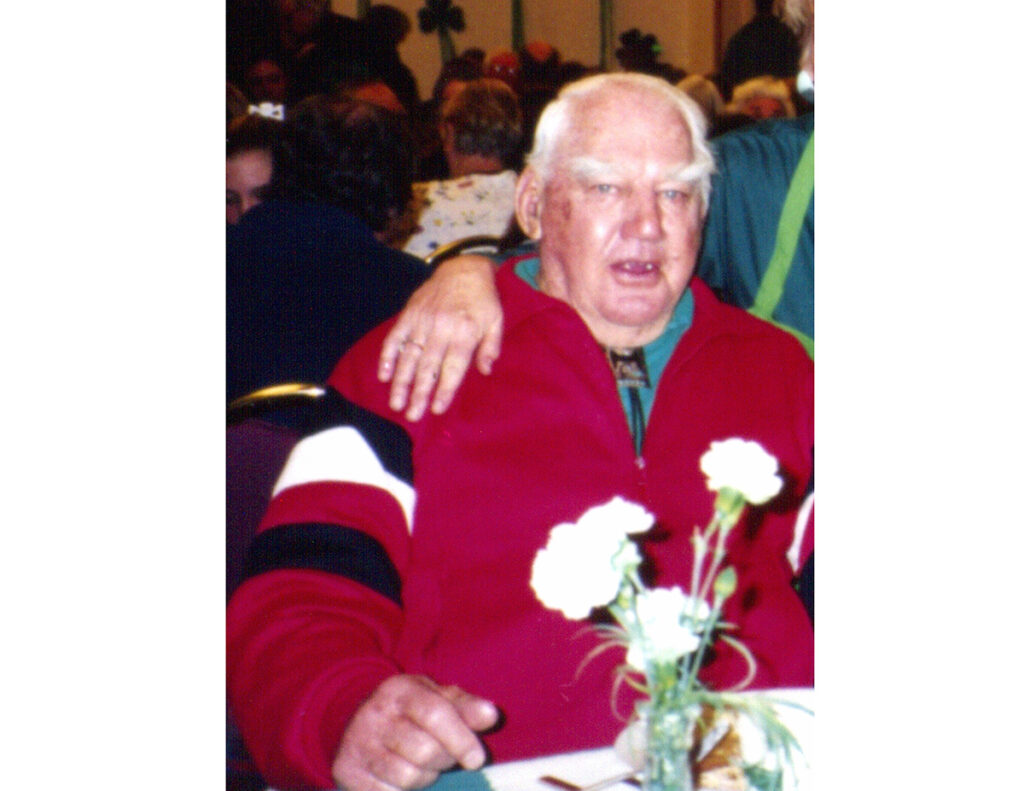
Robert "Bud" Woods
One 60 minute oral history interview with Robert “Bud” Woods by Larry Fredrick on January 10th, 1996. The subject of the interview is the Keene Block which he owned. This interview is part of the Architectural Survey Oral History Project
Bud Woods
Interviewed by Larry Fredrick
January 10, 1996
C146_1996.019.0001
Larry Fredrick [00:00:02] …Architectural Survey Oral History Project. Today, January 10th, 1996, we are interviewing Bud Woods, owner of the Keene Block. First of all, Bud, thanks for being here. I really appreciate your participation in this. First of all, I’d like just a brief biography of yourself. And when you were born.
Bud Woods [00:00:27] I was born March 16th, 1921, in Illinois. My granddad was a medical doctor, and in those days, I guess, the children went home and the daddy delivered. It was easier and what have you. So I was born in Rio, Illinois, which is out of Galesburg, Illinois, but we really lived in Chicago, or my parents did.
Larry Fredrick [00:00:57] Okay. When did you first come to Aspen?
Bud Woods [00:01:05] I first came to Aspen in ’57 or ’58, I forget which, to visit. We were living in Minneapolis, Minnesota, and there was a guy named Dave Cochran up there, who was mayor of some little town around Lake Minnetonka, who I got to know, and also a Doctor Leavenworth. And they were skiers. And my wife used to be a skier. She was a ski patroller on the East Coast. And so they decided to come to Aspen. They asked me to come along. Dave Cochran had his wedding celebration, or honeymoon or whatever they call it, out here on Cemetery Lane, right next to the cemetery. And so we stayed in that home right next to the cemetery in ’57 or ’58. And that’s how I was introduced to Aspen some years ago.
Larry Fredrick [00:02:13] Now, when you arrived in Aspen in 1957 or ’58, what did the town look like?
Bud Woods [00:02:20] Well, it was a fine town, I guess. You know, it was a small town, and I didn’t notice it was any different than any other small town, other than they had skiing. That’s all I knew.
Larry Fredrick [00:02:31] What did the downtown business look like?
Bud Woods [00:02:35] Well, the downtown, they didn’t have any malls. There were no malls. And it wasn’t a vibrant town, to my recollection. It was just sort of a small town.
Larry Fredrick [00:02:49] What kind of businesses were operating at the time?
Bud Woods [00:02:52] Well, I can’t remember all the businesses because I was only interested in satisfying my bride about skiing. But, you know, I wasn’t into that, and I think they had the normal things in town.
Larry Fredrick [00:03:08] Now, these buildings were rather old that were standing at that time. Were you aware of any historic significance of the buildings?
Bud Woods [00:03:15] No. I heard a lot of stories. If you’d have only bought this whole block, you could have bought it for taxes, you know, and things like that. But I wasn’t into that, and I didn’t know whether I’d ever do anything.
Larry Fredrick [00:03:33] Was there a time that you became aware of the historical significance of any of the buildings?
Bud Woods [00:03:41] No, other than when I bought this building.
Larry Fredrick [00:03:45] We’re referring to the Keene Block.
Bud Woods [00:03:47] Yeah.
Larry Fredrick [00:03:48] Okay. We’ll come back to that and talk about that building. Are there any buildings that are gone today that that you remember? Any significant buildings that disappeared or were torn down or anything like that?
Bud Woods [00:04:01] No. No, I don’t know.
Larry Fredrick [00:04:05] Nothing that you’re fond of, that you miss, that… neat buildings…?
Bud Woods [00:04:09] See, you have to understand that I’m really not a resident.
Larry Fredrick [00:04:12] Right, right. You’re here part-time.
Bud Woods [00:04:15] That I’m here part time. And I worked, you know, around the world for so many years. And I’d just come back when I could. And so I’m not too much into the history of Aspen.
Larry Fredrick [00:04:29] So do you think the visitors, when they come here, that they recognize the history or pay attention to it?
Bud Woods [00:04:37] Might have.
Larry Fredrick [00:04:38] Might have. What about other residents, do you think the community is very aware of the historical significance of some of these structures?
Bud Woods [00:04:48] Oh, I think so. Yeah. Yeah. Sure.
Larry Fredrick [00:04:51] You’ve had to deal with, probably, the Historic Preservation Committee. So is that part of the awareness that you’re thinking of?
Bud Woods [00:05:01] Yes and no. See, there used to be a man at the Historical Society who lived on the third floor. Do you remember his name?
Larry Fredrick [00:05:10] No, I don’t.
Bud Woods [00:05:12] Well, he lived there for years.
Larry Fredrick [00:05:13] Oh, Joe Bolon. You mean at the Historical Society itself?
Bud Woods [00:05:17] Joe Bolon. Yeah, Joe Bolon. And I used to go down there and talk with Joe, and he’d play the piano and all that kind of stuff. And he used to look after our house that we have here to, you know… So, we talked a lot about this and that, but Joe was sort of an old veteran here, although this wasn’t his birthplace, I guess.
Larry Fredrick [00:05:41] Right. I think it was Trinidad or Walsenburg.
Bud Woods [00:05:44] Somewhere around, but then he came to here. Yeah.
Larry Fredrick [00:05:45] Right. There’s been a lot of building going on since you first arrived here. Is there any building today that you think is pretty unique or going to be historically significant 100 years from now that’s a modern building?
Bud Woods [00:06:06] Oh, I don’t know.
Larry Fredrick [00:06:07] None that stick out in your mind?
Bud Woods [00:06:08] No, the Ritz, you know, everybody knows the Ritz. That’s probably a big deal, but I don’t know about it, you know.
Larry Fredrick [00:06:16] 100 years from now, would anybody care?
Bud Woods [00:06:18] Yeah. I don’t know.
Larry Fredrick [00:06:19] Okay. Okay. Well, that’s just a quick review, and no problem. What I want to do now is talk about some specific buildings and how you remember them and how you think about them. The first building… I want to start on Main Street and talk about a couple of buildings there. The Sardy House. What was the Sardy House when you first came here? Do you remember? Was it the Sardys’? Did the Sardys live in it?
Bud Woods [00:06:47] The Sardys lived there. Yeah, they lived there.
Larry Fredrick [00:06:49] Has it changed very much over the years?
Bud Woods [00:06:51] Oh, I don’t think so. They built that thing in the back, I think. You know, but old Tom used to tell great stories about the funeral home that he had there and things like that.
Larry Fredrick [00:07:04] Do you remember any specific…?
Bud Woods [00:07:07] No.
Larry Fredrick [00:07:08] Now, you were a chaplain. Did you do any funerals in there or…?
Bud Woods [00:07:13] No, never did. I wasn’t around here when it was a funeral home. No.
Larry Fredrick [00:07:18] So he had changed the…
Bud Woods [00:07:19] However, I’ve done a lot of funerals, but not in the Sardy House.
Larry Fredrick [00:07:22] Okay. Thank you. You mentioned the addition to the back. Does that bother you? Is it a good addition or…?
Bud Woods [00:07:30] No. It doesn’t bother me at all.
Larry Fredrick [00:07:32] Now that’s changed now. Instead of a residential area, it’s a business. It’s a bed and breakfast inn. Is that a nice use for it, or is it appropriate?
Bud Woods [00:07:45] As far as I’m concerned, it’s fine.
Larry Fredrick [00:07:46] Good, good. And let’s move down the street a little bit. Catty-corner from the Hotel Jerome, we call it the Lincoln/Chitwood block, but it’s better known today as the Cantina.
Bud Woods [00:07:59] Yeah.
Larry Fredrick [00:07:59] Now, what was in the Cantina when you first arrived?
Bud Woods [00:08:02] I really don’t remember, but it was a commercial enterprise. And as I understand it, they were having problems with the structure. They had to reinforce this or reinforce that. It was caving in or something like that.
Larry Fredrick [00:08:17] Oh, really?
Bud Woods [00:08:19] Well I only heard this. You know, I wasn’t privy to any of the knowledge, but they had… when they did that over, I think they did it from the bottom up.
Larry Fredrick [00:08:28] When they did the recent remodeling?
Bud Woods [00:08:30] Yeah. For the Cantina. And that’s all I remember about it.
Larry Fredrick [00:08:35] No particular businesses in there? You didn’t go there and…?
Bud Woods [00:08:38] Well, I think they used to have a sweater shop in there, where they sold Norwegian sweaters. Am I right on that?
Larry Fredrick [00:08:47] I’ll have to check my research.
Bud Woods [00:08:49] I think they did, and my wife used to go there. I think they’re still in town here someplace. And just on the corner, I think, I can’t remember what it was, but I don’t think it was an eating place.
Larry Fredrick [00:09:02] Okay. Now, in the recent remodel, they took the brick and painted it. Do you have an opinion about painting the old brick or not painting it?
Bud Woods [00:09:11] Well, I don’t like it because there’s maintenance problems. But it doesn’t bother me, though, you know, anyway.
Larry Fredrick [00:09:18] Okay. Well, that’s a legitimate statement. Let’s move up to Hopkins Street and the Collins Block, which is better known as Sardy’s Hardware. Do you have any memories of Sardy’s Hardware?
Bud Woods [00:09:33] Oh, yeah. It was a great hardware store. I always went there.
Larry Fredrick [00:09:37] You owned a business here, so you probably had to go in there quite a bit for parts.
Bud Woods [00:09:41] A lot of times. Yeah, and I went across the street. They had a lumber yard there, too, you know, where that new stuff is. Yeah, I went in there all the time.
Larry Fredrick [00:09:52] What was it like when you went in there?
Bud Woods [00:09:54] It was very nice. And they had about everything you wanted. You could go across the street and get whatever they didn’t have there.
Larry Fredrick [00:10:02] Any special stories about it? Do you remember anything special about it when you went in?
Bud Woods [00:10:09] No.
Larry Fredrick [00:10:09] Now it’s changed pretty radically. It’s now pretty high-end shopping. Do you think they’ve done a good job, or do you have any feelings about it?
Bud Woods [00:10:20] Well, I don’t have any feelings about it, you know? They own the property. They ought to be able to do what they want to. Contrary to some people’s opinion in this town.
Larry Fredrick [00:10:31] Okay. Well, what do you feel? If they can do what they want to, do you feel they can do what they want to the inside and still keep the outside?
Bud Woods [00:10:39] Yeah. And the outside is immaterial to me. You know, the historical preservation outfit has a little problem with that, but I think it’s overkill.
Larry Fredrick [00:10:53] Okay. Okay. Well, now just next to the Brand Building, going east a little bit, or the Collins Block, is the Brand Building. Now, what was the Brand Building like when you first came?
Bud Woods [00:11:04] Well, there was a gas station on the corner. Yeah, on the corner down there. And I guess that went by the wayside. I don’t know much about the Brand Building other than they rehabbed it.
Larry Fredrick [00:11:20] Well, what did they do when they took out the gas station? What kind of businesses went in?
Bud Woods [00:11:24] Well, they put in commercial stores.
Larry Fredrick [00:11:26] Do you remember any of the kinds of businesses that they had?
Bud Woods [00:11:30] No.
Larry Fredrick [00:11:32] But now it has changed again. They did a big, massive remodel recently on that.
Bud Woods [00:11:38] I think it’s all “condominiumized,” isn’t it? Upstairs?
Larry Fredrick [00:11:40] Upstairs. Mhm.
Bud Woods [00:11:41] Yeah.
Larry Fredrick [00:11:43] And retail on the first floor.
Bud Woods [00:11:45] Yeah.
Larry Fredrick [00:11:47] Are there more businesses in there now than there were originally? Or after the first rehab?
Bud Woods [00:11:52] I think so. Yeah.
Larry Fredrick [00:11:53] And is there anything special about that building that you remember architecturally or…?
Bud Woods [00:12:02] No.
Larry Fredrick [00:12:04] Okay.
Bud Woods [00:12:05] Other than the fact he put a big sign on the side of this building, “Brand Building,” with an arrow pointing down there, and I said, “Hey…”
Larry Fredrick [00:12:13] Oh, really?
Bud Woods [00:12:14] Yeah.
Larry Fredrick [00:12:14] Oh, I didn’t know that.
Bud Woods [00:12:15] So that was taken down.
Larry Fredrick [00:12:17] He painted his sign on your building?
Bud Woods [00:12:19] Yeah.
Larry Fredrick [00:12:20] That said, “The Brand Building,” with an arrow going…
Bud Woods [00:12:22] That way.
Larry Fredrick [00:12:23] Well, I’ll be darned. I didn’t know that. Okay. That’s great. Well, let’s go down to Hyman Avenue. The Crystal Palace is sort of on the edge, the western edge, of the business district. What was the Crystal Palace in 1958? Was it the Crystal Palace?
Bud Woods [00:12:39] Well, it hasn’t changed all that much, but when we first went there, you couldn’t stand up on the second floor. He raised the roof or whatever it was up there, but you couldn’t stand up. And you had to sort of lean down as you walked to your table. And, uh, but it wasn’t, you know, it wasn’t changed very much.
Larry Fredrick [00:13:05] But he did put a significant second floor?
Bud Woods [00:13:07] Oh, yeah. Well, he had the second floor, but it was too… not enough when you stood up. And then he raised it, I guess, or else he lowered the floor, one of the two. And, you know, I wasn’t here all the time because I was working away from here.
Larry Fredrick [00:13:25] But that building basically hasn’t changed much then?
Bud Woods [00:13:28] Oh, no. He did a big rehab job on that thing. You know, I don’t know when that second floor went up. Do you know?
Larry Fredrick [00:13:36] No, I don’t.
Bud Woods [00:13:38] Then, that was… it was not much before.
Larry Fredrick [00:13:45] It was much tinier?
Bud Woods [00:13:47] Smaller, yeah.
Larry Fredrick [00:13:48] It had sort of a second floor, and then he added more to it?
Bud Woods [00:13:52] Yeah. Then he put that stuff up there.
Larry Fredrick [00:13:55] I’m curious. That’s been the Crystal Palace since about that time. What if the Crystal Palace moves? What kind of business do you see in there in the future? Any guesses?
Bud Woods [00:14:10] No, I don’t know.
Larry Fredrick [00:14:12] Would it still be business? Would it be a restaurant or…?
Bud Woods [00:14:15] Probably.
Larry Fredrick [00:14:16] Probably? I think it’s offices upstairs, right?
Bud Woods [00:14:19] Yeah, offices upstairs. I think Mead will stay there until he dies.
Larry Fredrick [00:14:26] Well, I’m just curious.
Bud Woods [00:14:27] He’s got a good thing going there, you know?
Larry Fredrick [00:14:28] Yeah. Now, coming down onto the Hyman Avenue, right across the mall from you, is the Aspen Block, the big painted building.
Bud Woods [00:14:40] Yeah.
Larry Fredrick [00:14:41] What was that like when you first came?
Bud Woods [00:14:45] Well, it hadn’t changed all that much anyway, other than the tenants. Mason and Morse used to be in there, in the corner.
Larry Fredrick [00:14:52] On the corner. Okay.
Bud Woods [00:14:53] Yeah. And, in fact, that’s where I bought this building, when they were there, on the corner. And they had other things around, you know, but mostly Mason and Morse. In fact, they… I think they were offered the building, and I said, “Well, let’s go buy it.” And Wendy Morse’s reaction to all that stuff is, “Hell, I’m sending kids through college,” you know, “I don’t have any money,” but I think he had a few bucks. He just didn’t want to buy it.
Larry Fredrick [00:15:34] Was that building painted originally when you came here or…?
Bud Woods [00:15:37] I can’t remember, but I think so.
Larry Fredrick [00:15:39] Okay. Because it’s painted rather uniquely now. It’s kind of a nice job.
Bud Woods [00:15:45] Yeah.
Larry Fredrick [00:15:46] Okay. Now let’s talk about the Keene Block, which is the building you own, better known as Aspen Drugstore. Now…
Bud Woods [00:15:55] Why is it called the Keene Block?
Larry Fredrick [00:15:57] Well, the man who built it, his name was Keene.
Bud Woods [00:16:00] I see.
Larry Fredrick [00:16:01] The original builder.
Bud Woods [00:16:02] The original builder. Was he a builder?
Larry Fredrick [00:16:05] Uh, no. He was a property owner who had it built.
Bud Woods [00:16:09] Oh, I see.
Larry Fredrick [00:16:10] When did you buy the building?
Bud Woods [00:16:14] I signed the contract in 1970, and we closed, I think, in January of ’71.
Larry Fredrick [00:16:26] Okay. What kind of shape was the building in when you bought it?
Bud Woods [00:16:31] Well, I really don’t know, you know?
Larry Fredrick [00:16:34] Well, I mean…
Bud Woods [00:16:35] When I bought this thing, Bill Mason, the realtor in town, Mason and Morse… we went around and you could have bought about four places on this mall right now. One down here was $150,000. This one was $190,000 or $195,000. The one across the street, that building you mentioned, was for sale. That could have gone. The diagonal one, where the bank was…
Larry Fredrick [00:17:04] The Ute City Banque? Cowenhoven.
Bud Woods [00:17:04] Yeah. That was for sale. And you could have bought about anything around here for peanuts in the 1960s, you know? So, I just thought that it was… looked pretty good here, and I didn’t know much about it. I was working in the Pacific. But we had bought an A-frame down here from Bill Mason of Mason and Morse. And my wife had a few dollars, you know, and so I said, “Bill, if anything comes up on a commercial business you think is pretty good, why let me know.” So I was on my way to the Pacific, and he took me through all these places. So I said, “Bill, that looks pretty good,” this building here. And I said, “Put it…” We were leaving, and I said, “Make an offer for me.” Well, I think I offered 180 or 185 or something like that, and it was 210 or something like that. So they came down to 195 or 97, I don’t remember the details. And then Wendy Morse and Bill Mason threw in some of their fee for real estate and said, “We’ll get it for you for 192 or 194.” I was in the Pacific then, in Hawaii, and we were talking on the phone and I said, “Okay.” So I bought it when I was living in Hawaii, over the phone.
Larry Fredrick [00:18:42] Now, when he took you through it, when you were here, what businesses were here?
Bud Woods [00:18:49] Uh, the drugstore was here, and the drugstore had the pharmacy in the main part of the building. It didn’t have the pharmacy where it is now.
Larry Fredrick [00:19:02] In the back.
Bud Woods [00:19:03] In the back there, there was a bookstore. And over in the side, there was Wax and Wicks, and Tony Canino had what was called Toro’s. I mean, later. Tony Canino went to Los Angeles and sold it to Steve Gray, and Steve Gray owned Toro’s down there. And on the second floor was Albie Kern, the lawyer. He’s still here. He’s been here over 30 years, I think. And in the back was the beauty shop, which is still there. It changed its name over the years, but there was a beauty shop there.
Larry Fredrick [00:19:51] Now, that was the second floor. Now there’s a third floor on here now.
Bud Woods [00:19:54] Well, there is here, but not over there.
Larry Fredrick [00:19:57] Right. Right. Just on this… above the drugstore.
Bud Woods [00:19:59] Yeah, well, I put these two floors on. I had an architect called Rob Roy. People know him around town. He’s since moved on. And I talked to him about it, and he said I could put you two more floors up there. Because I thought it looked kind of goofy with just the Aspen Drug and nothing on top. You know, it was burned out. So he said, “I’ll put you two more floors up there and I’ll get a contractor.” See, I was still working out there. And so I said, “Well, okay, give it a whirl.” And he came up with this, and he put it to the city fathers, I guess, the building… whatever you do, you know, and he’s sending me letters all the time and talking to me over the phone. And I said, “Just do it,” you know. So he went through all the process, and the process at that time, I think they call it F.A.R. or something like that. They were just enacting some of these restrictions, you know?
Larry Fredrick [00:21:10] About what time was this? What year?
Bud Woods [00:21:12] This was ’75 to ’76. 1975 to ‘;76. I noticed the other day, I saw some drawings from ’74, so I guess I started in ’74, and I was still doing it in ’75. And, he put, he went through all these building process things, whatever they are. And he wrote and said that we’re having a little sticky wicket about something here, but I think it’ll work out. Well, there were 3 or 4 buildings at that time… I remember reading in The Aspen Times… that put in for building permits at that time, and you could do it under those restrictions when they put it in. But the new restrictions, you couldn’t do it. So they went to bat, and they fought whoever had the beef, the fight with. And they got it under the old restrictions, but they’d already processed it or something like that. So they were awarded that, but under the newer ones you couldn’t do it. So that’s when, in 1975, they started in 1976, these two floors were completed here.
Larry Fredrick [00:22:34] So the two floors above Aspen Drug, but there was already a second floor above the other section.
Bud Woods [00:22:39] Above the other section.
Larry Fredrick [00:22:40] Who did that?
Bud Woods [00:22:41] I think, as I understand it… I’m not sure, but as I understand it and people talking to me, there was a builder, a contractor here named Woods, and he used to live in town, I think he moved to Idaho. And he built the second floor and rehabbed this place. And he had an office there, where Albie Kern’s place is. He had an office in the back. Albie was sort of in the front. And he had that little office in the back, and he did everything. I forget his first name, but people around town know him. You know, I asked about him and I think his name was Woods or Wood.
Larry Fredrick [00:23:32] Now, you mentioned earlier “before malls.” Now your property faces the mall. That came in in the mid ’70s. That was rather controversial. Do you remember any opinions or were…?
Bud Woods [00:23:51] No, because I really wasn’t here. I was working.
Larry Fredrick [00:23:55] Do you… how do you feel about the mall today?
Bud Woods [00:23:57] I think they’re great. Yeah.
Larry Fredrick [00:24:00] It was a good thing then.
Bud Woods [00:24:01] Yeah.
Larry Fredrick [00:24:01] Was it good for the businesses in your building?
Bud Woods [00:24:05] Oh, I think so. Yeah,
Larry Fredrick [00:24:06] You think so? Wouldn’t have it any other way then?
Bud Woods [00:24:10] Well, do whatever, you know?
Larry Fredrick [00:24:12] How did they do the mall? Do you remember how they did it to begin with or…? I mean, it wasn’t quite as elaborate as it is today.
Bud Woods [00:24:19] No, I really don’t remember because I wasn’t here. I think it came in about ’75, didn’t it? Something like that. And I was still working, you know, out in the Pacific.
Larry Fredrick [00:24:32] So you read the Aspen Times and that’s how you got your news about…?
Bud Woods [00:24:37] Yeah, that’s about it.
Larry Fredrick [00:24:38] …what was happening in your buildings, so to speak.
Bud Woods [00:24:41] Yeah.
Larry Fredrick [00:24:41] Yeah. Okay. Okay. Well, good. We have two more buildings to talk about, and that’s about it. So let’s go to, uh, we call it the Brown and Hoag building, but you might call it the Crossroads or where the Banana Republic is today, the Independence Building. What was that like in 1958? Was it being used?
Bud Woods [00:25:02] Well, it was a drugstore.
Larry Fredrick [00:25:04] There was a drugstore there in ’58?
Bud Woods [00:25:07] Yeah.
Larry Fredrick [00:25:07] On the ground floor?
Bud Woods [00:25:09] On the ground floor.
Larry Fredrick [00:25:09] What about the top two floors?
Bud Woods [00:25:12] I think they were just apartments.
Larry Fredrick [00:25:14] Apartments of some sort?
Bud Woods [00:25:14] I don’t know, but as I understand it, that’s what they were.
Larry Fredrick [00:25:18] Any other businesses on the ground floor?
Bud Woods [00:25:21] Well, they had… I think they had the whole ground floor. And in the back, they had sort of like a delicatessen operation where you could buy food and things, you know?
Larry Fredrick [00:25:32] Was there anything in the basement?
Bud Woods [00:25:34] I think so, but I don’t remember.
Larry Fredrick [00:25:37] What kind of shape was that building in?
Bud Woods [00:25:39] It looked pretty good to me.
Larry Fredrick [00:25:41] Pretty good? Pretty substantial build? Now wasn’t one for sale when you were looking for buildings?
Bud Woods [00:25:45] Yeah, I think it might have been. And I was… well, I’ve been thinking about a lot of them, you know? But I never bought any more.
Larry Fredrick [00:25:55] Now, just down the street from that, east again, on the opposite corner is a pink building that we call the Bowman Block, which is where Les Chefs is today. And actually there are three buildings there, kind of together painted. What was in that?
Bud Woods [00:26:14] I don’t know.
Larry Fredrick [00:26:14] Don’t have any idea?
Bud Woods [00:26:15] No.
Larry Fredrick [00:26:16] Do you remember any businesses that have been in it over the years?
Bud Woods [00:26:19] No.
Larry Fredrick [00:26:20] And any, um… it’s painted kind of an odd pink color. Do you remember anything about the paint or…?
Bud Woods [00:26:30] No.
Larry Fredrick [00:26:30] It wasn’t an area of town that you crossed or dealt with?
Bud Woods [00:26:35] No. I heard something about a bowling alley over there.
Larry Fredrick [00:26:39] Right. That was across the street from it.
Bud Woods [00:26:41] Across the street from it? And I think I went there after… after that, they had a… I think Kurt Baar had an Austrian band where they served food and things like that. Whatever that place was. Right around that area.
Larry Fredrick [00:26:58] Yeah, after it was a bowling alley. Okay, well, that’s some wonderful information, and I appreciate the input that you’ve got. This is going to help us quite a bit. I just want to finish up… is there anything that you want to add or that you want to talk about Aspen? You’re more than welcome to put it on tape for posterity.
Bud Woods [00:27:23] Well, no, other than the fact, you know, people talked years ago about buying up things for taxes, and I bought this building at a real cheap price. Everybody did in 1960 or ’70, you know, and it’s appreciated a little bit. In fact, that tax man assessed it, you know, at 4,600,000.
Larry Fredrick [00:27:52] That’s a big change.
Bud Woods [00:27:53] 4.6. Now that’s a big change, you know? We haven’t put that much in it. But the rents have gone up a little bit too. They were $27,000, I think, when we started. And now they’re almost ten times that, you know, which isn’t bad. But things have gone up all around, I guess, but especially in Aspen. And I wonder about it, you know? And we’re… I think I’ve been known as one of the landlords that works with the people that are renting. And you talk with Steve Wickes. One time, their renewal for the lease went out, and Steve’s dad was still alive. He used to have an office right in here, and I called him up, and I said, “How’s the drugstore doing?” Well, the drugstore is doing fine. I said, “Well, that’s good. You think you want to stay there?” And he said, “Yeah, sure, everything’s great.” I said, “Well, your lease to renew expired about 2 or 3 months ago, you know?” WHAT? And so he did a little whoopty doo and on my desk within about two hours was a backdated option to renew. And that happened twice. Twice, I could have run these guys out, but I didn’t, because, you know, anybody that pays you so much a year, it’s not good to do that. But I think the Wickes family is just a great family, and I hope they can stay forever here. Steve is like a son to me really. He’s a nice boy. So those things happen, and all these other people have pretty, pretty good dues. The guy at Carnevale’s down there is $14 a square foot, I think. You know, when you fan it out and… you can’t find places here for $14 a square foot, I don’t think.
Larry Fredrick [00:30:21] Well, what do you think of other landlords that are charging…?
Bud Woods [00:30:24] I don’t think it’s right. I don’t think it’s right. And that’s why… but, you know, I probably got in at a time, you can have lower prices. Some of these guys might have paid enormous prices for their places. And so the rents have to stay up there. But I think the operator or proprietor or business owner or something ought to make a few bucks too, you know, not gouge. And that’s my philosophy.
Larry Fredrick [00:30:56] So do you see that as a problem for Aspen’s future?
Bud Woods [00:30:59] Well, I don’t think… {recording cuts out} …and they have deep pockets. And so I guess it’s all right, but I don’t think it’s good.
Larry Fredrick [00:31:10] Does that change the community significantly?
Bud Woods [00:31:13] Oh, sure. You know, you got high caliber stuff. You got high caliber people. And everybody wants to buy a t-shirt from Aspen or something.
Larry Fredrick [00:31:24] Have the types of visitors changed over the years?
Bud Woods [00:31:27] I don’t know. I don’t know.
Larry Fredrick [00:31:30] Their buying habits or…?
Bud Woods [00:31:32] I don’t know. But I’m not in the business. But, you know, I think we’ve got a bunch of big hitters coming in, and I guess that’s all right, you know. They have to spend their money someplace.
Larry Fredrick [00:31:45] Might as well be here.
Bud Woods [00:31:45] Yeah. Might as well be.
Larry Fredrick [00:31:48] Okay.
Bud Woods [00:31:49] Yeah.
Larry Fredrick [00:31:50] Well, I think that will conclude it then. If you don’t have anything else you want to put. And I really appreciate your giving us the time.
Bud Woods [00:31:58] It’s been a pleasure.
Larry Fredrick [00:31:59] Yes.